
Let's talk about the elephant in the room
You're in a long-term partnership. You want to explore solo pleasure with a lemon vibrator. And you're wondering if that's a betrayal.
It's not. But I understand why the question feels loaded.
The myth that needs to die
Here's what most couples absorb (usually without talking about it): if you're satisfied in your relationship, you don't need anything else. If you want to explore solo, it means something's missing. If you bring a toy into solo play, you're somehow choosing it over your partner.
None of that is true. Not even close.
Masturbation—solo pleasure, full stop—is not a referendum on your relationship. It's not a symptom of dissatisfaction. It's not practice for infidelity. It's a normal, healthy part of sexual development that exists entirely separately from partnered sex.
I've worked with hundreds of couples, and I can tell you with confidence: the ones who are most honest about their individual sexuality are often the ones with the strongest partnerships. Why? Because they've separated identity from intimacy. They know the difference between "I want this for me" and "I want this instead of you."
A lemon clitoral vibrator in your solo time isn't a threat to your partner. It's clarity.
Why solo exploration actually strengthens couples
Three things happen when you have a robust solo practice.
1. You stop performing. When you know your own body—what patterns work, which intensities feel best, how you actually orgasm without an audience—you show up differently in partnered sex. You're not trying to figure out if you're enjoying it while simultaneously worrying about timing or looking right. You know the shape of your pleasure. That knowledge is magnetic to good partners.
2. You stop resenting your partner for "not being enough." This is the quiet killer of long-term relationships. If your only route to pleasure is through your partner, you're setting them up as your source of satisfaction. That's an impossible job. They'll fail sometimes. You'll feel resentful. Solo play—especially with tools like a lem vibrator that might work faster or more reliably than partnered sex—takes you off that treadmill. You get what you need solo. Your partner becomes a choice, not a necessity.
3. You actually enjoy partnered sex more. When you're not anxious about whether you can finish, or whether you should fake it, or whether your body is broken because it responds to a vibrator differently than fingers—the sex is better. Paradoxically, having an excellent solo practice makes you a better, more present, more honest partner.
The conversation that actually needs to happen
Okay, so solo pleasure is healthy. That doesn't mean you keep it hidden.
I'm not saying you need to narrate every session. (You don't.) But if you're in a committed partnership and you're bringing something new into your sexuality—even something that stays private—your partner deserves to know it's happening. Not for permission. For transparency.
Here's how that conversation might actually work:
"I've been thinking about exploring my own pleasure more. That means solo time with a vibrator. This isn't about anything being wrong between us. It's about knowing my own body better. I wanted you to know."
That's it. You're not asking. You're not apologizing. You're informing your partner that you're taking your sexuality seriously, and you trust them enough to tell them.
Some partners will feel relieved. Some will feel curious. Some will feel initially threatened—and that's okay. That feeling is data. It tells you something about their security or their own learned shame around pleasure. And that's a conversation worth having.
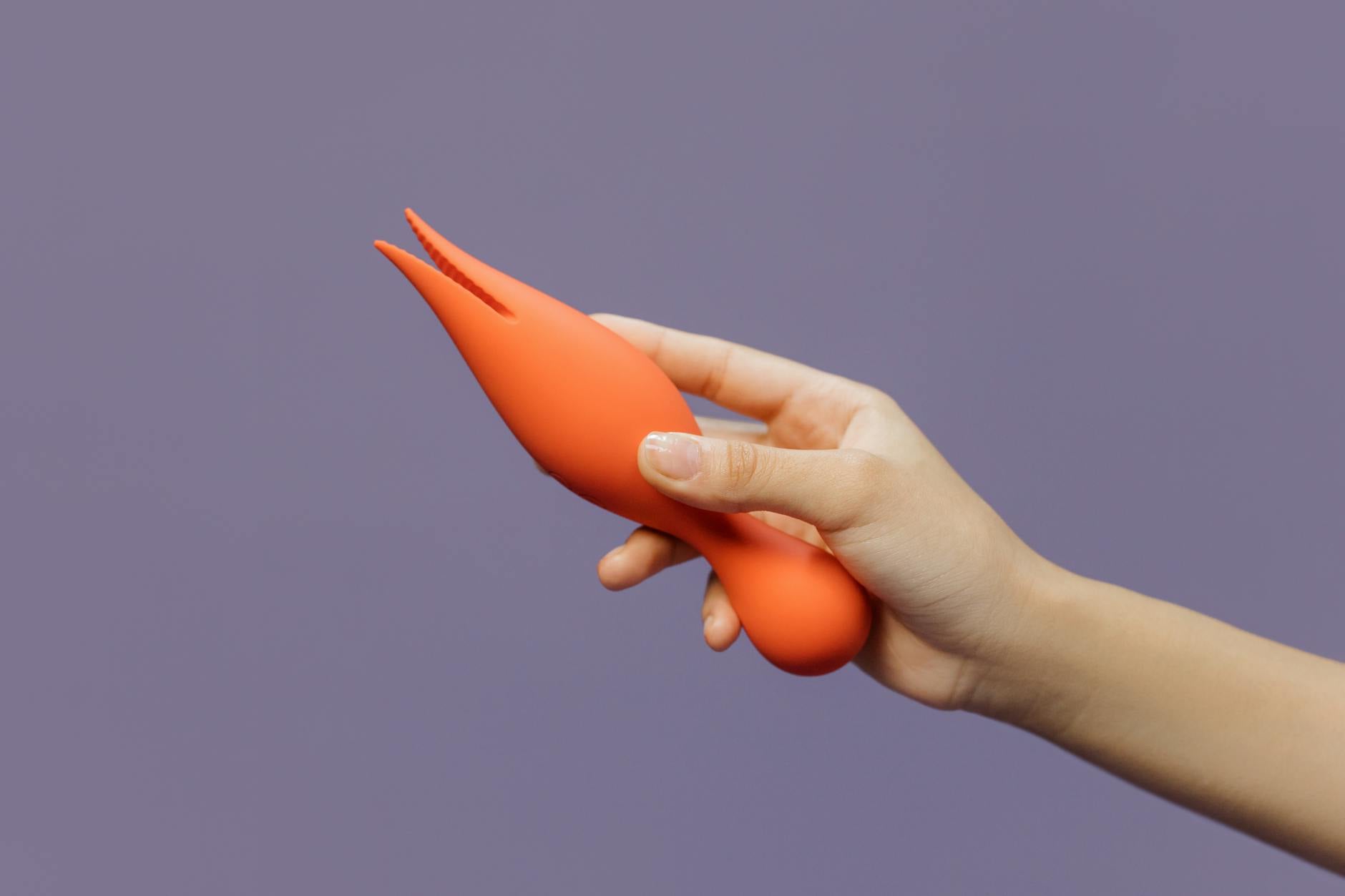
Photo by cottonbro studio on Pexels
But here's what I've observed: when both people in a relationship are comfortable with their own sexuality, the partnership becomes stronger. The pressure lifts. You're not each other's only source of pleasure, meaning you don't resent each other for inevitable gaps. You're partners who also happen to be lovers.
How to actually use a lemon vibrator solo in a long-term relationship
Let's get practical.
Timing matters. If you share a home or a schedule, create actual space. A locked door. 20 minutes you've silently claimed. Not sneaking around—just boundaries. Your partner doesn't need to be in the room, and you don't need to narrate, but they should know it's happening. ("I'm taking some time for myself this evening," is enough.)
A lemon vibrator is different from partnered toys. If you're bringing a clitoral vibrator like the Lem into the bedroom with your partner later, that's a different conversation and a different dynamic. If it's purely for solo time, your partner doesn't need the same kind of involvement. They need respect and honesty, not a front-row seat.
Your pleasure is yours. This is the hard part for people trained to perform. When you're solo with a lemon clitoral vibrator, there's no one to please but yourself. That means you can go fast if you want. You can switch patterns. You can spend 45 minutes on one sensation. You can have an orgasm that feels nothing like the ones you have with your partner, and that's fine. In fact, it's good. Solo pleasure teaches you what's possible without the pressure of another person's timeline or expectations.
Don't compare. Partnered sex and solo sex should feel different. They use different parts of your brain. With a partner, you're attuned to their pleasure, their responses, the shared rhythm. Solo, you're in your own nervous system. A lemon sucker—which works through gentle suction rather than vibration—might feel incredible when you're alone and totally relaxed, but feel too intense during partnered sex when you're also managing arousal and coordination. That's not a problem. That's just different contexts.
The guilt trap (and how to escape it)
Most of the conflict I see around solo pleasure in relationships isn't actually about the solo pleasure. It's about shame.
You feel shame about wanting it. You feel shame about enjoying it more than partnered sex sometimes. You feel shame about hiding it. Your partner feels shame about not being enough, or guilt about not caring enough to explore this part of their own sexuality. Everyone's shame bounces around the room until someone explodes.
Here's the antidote: information and honesty, not performance and secrecy.
If you're using a lemon vibrator solo and it's making you feel guilty, ask yourself: Why? Is it because your partner would genuinely feel betrayed, or is it because you've absorbed the narrative that your pleasure should exclusively belong to them? Is it because you're hiding something, or because you think you should be hiding something?
There's a real difference. One requires a conversation with your partner. The other requires a conversation with yourself.
When solo play naturally leads to partnered exploration
Here's what often happens naturally: you explore solo. You learn something about yourself. You feel more confident. Your partner notices that confidence. They become curious. Maybe they ask about it. Maybe they suggest using a lemon clitoral vibrator together. Maybe the conversation opens up into deeper intimacy than you've had in years.
I've seen this play out dozens of times. The gateway isn't the toy. It's the willingness to know yourself first, before you invite someone else into the experience.
How to Use a Lemon Vibrator When Your Partner Isn't Interested in Toys is a resource if you want to explore together later. But right now, we're talking about solo. We're talking about you.
Real talk on long-term desire
One more thing: desire in long-term relationships naturally fluctuates. Sometimes you're all in with your partner. Sometimes you're disconnected. Sometimes you need to reconnect with your own body before you can show up fully in the relationship.
A regular solo practice—whether that's weekly, monthly, or as-needed—keeps you connected to yourself. It reminds you that you're a whole person with your own sexuality, not just half of a couple. That kind of self-knowledge is actually the foundation of good partnership.
Your partner benefits from this too. You show up clearer, calmer, more confident in what you want. That's attractive. That's intimate in a different way.
The bottom line
Using a lemon vibrator solo while in a long-term partnership isn't a red flag. It's responsible self-care. It's an act of respect toward yourself and, ultimately, toward your relationship. You're saying: "I'm important enough to know well. My pleasure matters. I'm willing to explore without guilt."
That clarity changes everything.
People also ask
Is using a vibrator solo cheating if I'm in a committed relationship?
No. Masturbation is not infidelity. It's a solo sexual act that exists separately from your partnership. If your partner has said they consider it cheating, that's a values conversation worth having—but most relationship therapists and sex educators agree that solo pleasure is normal, healthy, and distinct from betrayal. It becomes problematic only if you're hiding it out of shame rather than respect for privacy, or if you're using it to avoid actual partnered intimacy that your relationship needs.
Should I tell my partner I'm using a lemon vibrator alone?
Yes, at some level. You don't need to provide play-by-play details, but your partner deserves transparency. A simple, "I'm exploring my own sexuality solo with a vibrator, and I wanted you to know," respects their right to information about your life while protecting your privacy about the specifics. If your partner reacts with shame or anger, that's information about their own relationship to sexuality—and it's worth exploring together.
Will using a lemon clitoral vibrator alone make my partner feel inadequate?
Maybe, initially—but that usually reflects their own insecurity, not reality. A confident partner understands that your solo pleasure isn't a judgment on theirs. If your partner does feel threatened, the fix isn't to stop exploring. It's to have a conversation about their fears and what reassurance actually looks like (spoiler: it's usually not "I'll never use a vibrator alone again").
Can solo lemon vibrator use improve my partnered sex?
Absolutely. When you know your own body, what patterns work, and how you actually orgasm, you bring that knowledge into partnered sex. You're more confident. You can guide your partner. You're less focused on performing and more present. That's a net positive for both of you. How to Use a Lemon Vibrator When Your Body Responds Slowly to Touch covers how this knowledge translates into partnered contexts too.
What if my long-term partner wants to watch or participate in my solo time?
That's a boundary question. Solo time means solo. If your partner wants to be involved, that shifts the dynamic—it's no longer purely for you. You get to decide if that works for you. Some people enjoy being watched. Some people need that time to be truly alone. Both are valid. Communicate what feels right.
How do I start a conversation about solo pleasure if my partner and I have never discussed it?
Start small and factual: "I've been thinking about having some solo time with a vibrator for myself. This isn't about anything being wrong—it's just something I want to explore." Pause. Let them respond. If they ask questions, answer honestly but briefly. If they seem defensive, don't over-explain. Defensiveness usually isn't about the vibrator. It's about deeper stuff around sexuality, shame, or feeling like something's being taken from them. That's the actual conversation to have later, once the initial shock settles.