
Here's what usually happens
One partner wants to introduce toys. The other sees it as a rejection, a threat to their masculinity, or proof that what they're already doing isn't enough. Neither of you says this outright. Instead, you get eye rolls. Deflection. "We don't need that." Then resentment quietly builds because one of you feels unheard and the other feels pressured.
This is one of the most common relationship tensions I see in my practice, and it's almost never actually about the toy. It's about what the toy means.
Why partners resist toys (the real reasons)
When someone dismisses a lemon vibrator or any clitoral vibrator, they're usually experiencing one of four things:
Fear of inadequacy. The belief that if you want a toy, their body isn't enough. This is real, it's painful, and it usually stays unspoken.
Loss of control. Some partners worry that introducing toys means giving up their role as the primary source of pleasure. That feels like displacement, not addition.
Shame or awkwardness. Your partner might have grown up with messaging that vibrators or lemon sexual toys are extreme, unfeminine, or something only lonely people use. That messaging doesn't disappear just because they're in a relationship.
Genuine mechanical concerns. Some people worry that vibrators numb sensitivity over time, or that relying on toys means they'll never orgasm without one. (This isn't accurate, but it's a legitimate fear if nobody has ever explained how clitoral vibrators actually work.)
None of these reasons make sense logically. All of them make perfect sense emotionally. This is why the conversation matters more than the tool.
The conversation before the vibrator
Introducing a lemon clitoral vibrator to a resistant partner requires separating three things that usually get tangled together.
First: your pleasure is not a referendum on them. You're not introducing a vibrator because they're bad at sex or not enough. You're introducing it because your body has specific needs, and toys are tools that help meet those needs. A skilled partner plus a tool is not a commentary on the partner. It's math.
Say this. Explicitly. Not in the moment, but in a calm conversation away from the bedroom. "I want to use a vibrator because my body responds well to that kind of stimulation. This isn't about you or what you do. It's about what my body needs to feel good."
Second: their role doesn't disappear. This is the reassurance that usually needs repeating. A lemon vibrator doesn't replace them. It works alongside them. They can hold it. They can watch. They can use it on you and feel you respond. Their hands are still there. Their body is still there. Nothing is being taken away.
Third: this is a "we" thing, not a "you" problem. The tone matters wildly here. "I need to tell you something I've been thinking about" sounds like a problem you're bringing to them. "I want to try something that might make our sex better" sounds like something you're building together. One creates defensiveness. One creates curiosity.
How to bring it up without triggering a shutdown
Timing: not during sex, not during conflict, not when either of you is stressed or tired. Choose a moment when you're both relaxed and have time. This isn't a five-minute conversation.
Framing: "I've been reading about lemon vibrators, and I'm curious to try one. I know this might feel weird at first, and I want to talk through what that would look like for us." Notice: no accusation, no comparison to past partners, no "you never" language.
Invitation: "I want you involved in this, not just okay with it. Would you want to pick it out with me? Or would you rather I choose and then we talk about how we'd use it?" Some partners feel less threatened if they have agency in the selection.
Reframing their concerns: If they say "I don't think you need that," the response isn't defensive. It's gentle redirection. "You're probably right that I don't need it to have pleasure. But I want to explore whether I like it. Can you be curious about that with me instead of convinced I shouldn't?"
The physical introduction
Once you've had the conversation and your partner has (somewhat reluctantly, maybe) agreed to try this, the actual first time matters.
Start solo or with minimal involvement from them. Many resistant partners actually relax once they see their partner using a lemon clitoral vibrator successfully and clearly enjoying it. The fear is abstract until they realize nothing bad is happening.
Use it in a context where they're touching you too. Your hand on their shoulder. Their hand on your leg. Their mouth on your neck. The vibrator is not the only point of contact. This reinforces that they're still part of the experience, not replaced by it.
If they want to hold the vibrator or try it on you themselves, great. If they just want to be there while you use it, also great. Don't push them into active participation before they're ready. Watching is often the gateway to involvement.
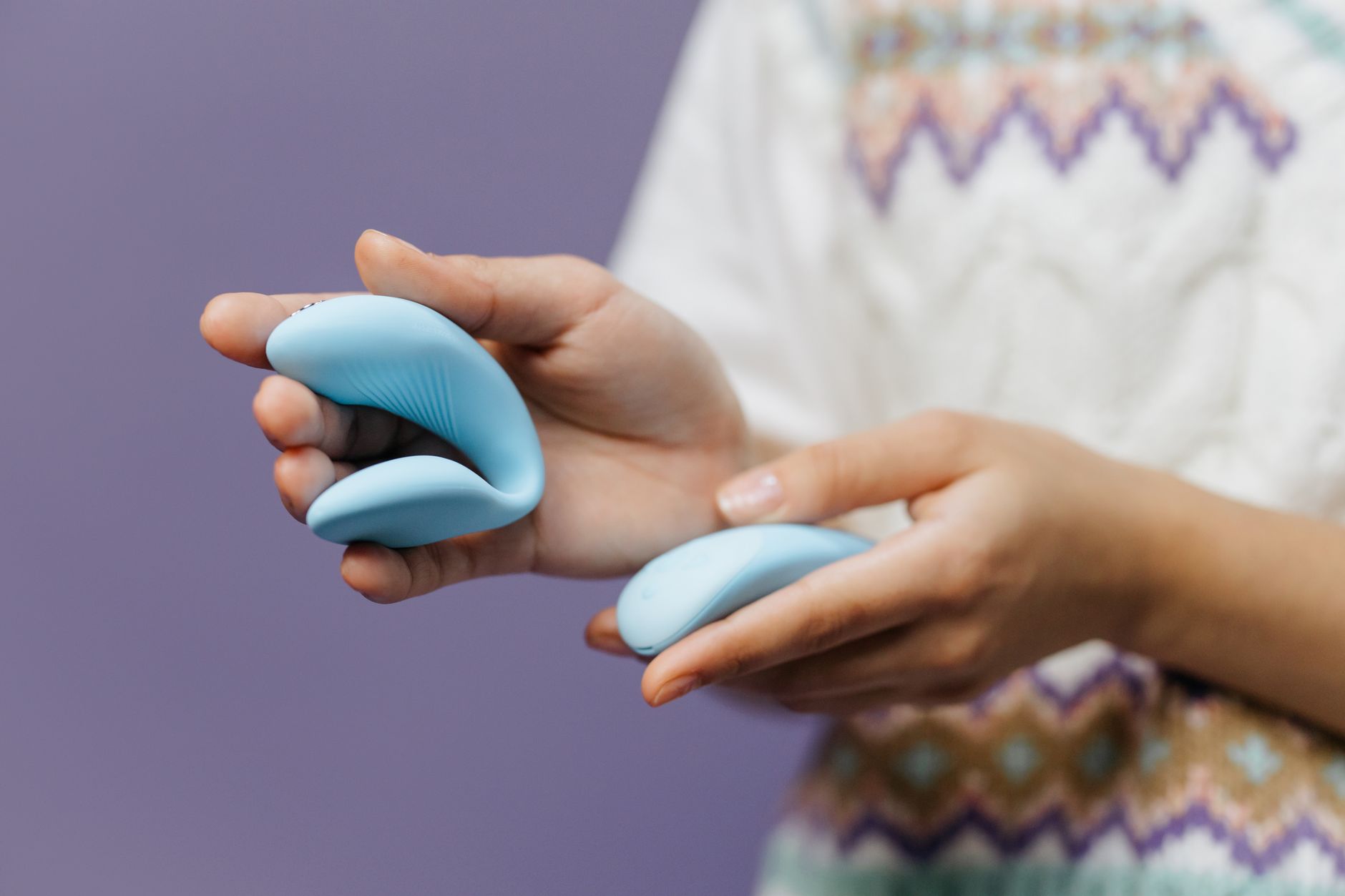
Photo by cottonbro studio on Pexels
What to do if they still resist after trying
Here's the harder part: what if you've had the conversation, you've introduced the vibrator gently, and they still don't want it in your shared sex life?
You get to make a choice. You can:
Use it solo and keep your sex life separate. This is completely valid. Many people use lemon vibrators or other clitoral vibrators for self-pleasure and have a different rhythm with their partner. These don't have to be the same thing.
Revisit the conversation later. Sometimes people need time. A month ago they said no. Now they've thought about it and they're curious. Revisiting isn't nagging. It's giving them space to change their mind.
Accept that this is a genuine incompatibility and decide what that means. If your partner refuses to ever engage with toys and you want to use them in partnered sex, that's a real tension. It might be something you compromise on. It might be something that matters enough to work through with a sex therapist or relationship counselor. But ignoring it and building resentment is the path that actually damages desire.
The conversation doesn't end when they say yes or no. It's an ongoing negotiation.
Building comfort over time
Resistance often softens through exposure and education. If your partner sees you use a lemon vibrator and genuinely enjoy it, without any weirdness or pressure, their threat response usually decreases.
If they understand how clitoral vibrators actually work, the myths fall away. The lemon sucker sensation of toys like the Lem doesn't numb you. It amplifies sensation. It doesn't replace partnered sex. It enhances it. It doesn't mean you're addicted. It means your body likes what that particular stimulation does.
Consider sending them an article. Watching a video together about how lemon adult toys can improve partnered sex. Having them read reviews from other couples who use vibrators. Sometimes hearing it from sources beyond their partner makes it feel less personal and more informational.
The bigger picture
This resistance usually isn't really about the vibrator. It's about control, adequacy, fear of change, or feeling unheard. The vibrator is just the object where all that lands.
When you approach it from that angle, the conversation shifts. You're not fighting about whether toys are good. You're talking about what each of you needs to feel good, valued, and satisfied. The lemon clitoral vibrator is just the tool that makes that conversation happen.
Your pleasure matters. Your partner's feelings matter. These things can both be true, and finding the path where both matter is the work of a good relationship.
Common questions answered
Will using a vibrator make me lose sensation with my partner?
No. In fact, the opposite is common. Using a lemon clitoral vibrator solo or with your partner can actually increase overall body sensitivity. You're not conditioning yourself to need vibration in order to orgasm. You're learning what your body likes and bringing that knowledge back to partnered sex. Think of it as expanding your pleasure vocabulary, not narrowing it.
Can my partner use the vibrator on me if they're resistant to the idea?
Absolutely. Sometimes the resistance dissolves once they realize they can hold the vibrator and control it. It gives them back agency. They're not watching passively. They're actively involved in your pleasure. Some partners find that shift reframes the whole thing from threatening to connecting.
How do I know if this resistance is a dealbreaker or just normal caution?
Notice the conversation itself. Are they defensive but willing to talk? That's normal caution. Are they shutting down any conversation about it, getting angry, or making you feel ashamed for wanting to explore? That's a bigger pattern. One is something you work through. The other might point to larger relationship issues worth addressing with a therapist.
What if I use the vibrator without telling them?
I wouldn't recommend that. Trust matters more than the vibrator. If they find out you used it without discussing it, you've confirmed their fear that this is something you're hiding from them or that you don't value their opinion. The conversation is the whole thing here.
Is there a difference between introducing a lemon vibrator versus other types of toys?
Sometimes. The Lem and similar lemon clitoral vibrators feel less intimidating to some resistant partners because they're small, elegant, and feel less explicitly "toy like." They're easier to frame as a tool rather than as something that looks like the thing they're worried they're being replaced by. That's not always true, but it can help.
Should I compromise and not use it if they really don't want me to?
That depends on how much it matters to you. If it's something you mildly want to try, maybe compromise feels okay. If it's something that feels important to your sexual satisfaction, you're building resentment by giving it up entirely. That's when you might need help from a therapist to navigate what both of your needs actually are.
A final thought
Introducing a lemon vibrator to a resistant partner is really about introducing a conversation about what you both need and deserve in your sex life. The vibrator is just the thing that makes that conversation possible. Stay gentle. Stay clear. And remember that his resistance, while frustrating, usually comes from love and fear, not malice. That doesn't mean you change your mind about what you want. It means you approach the conversation like someone who cares about him and wants him involved, not defensive.
If you're looking for more strategies on navigating pleasure conversations with partners, check out our guide on how to use a lemon vibrator when starting solo after a long-term relationship to understand what you actually want before bringing it into partnered sex.