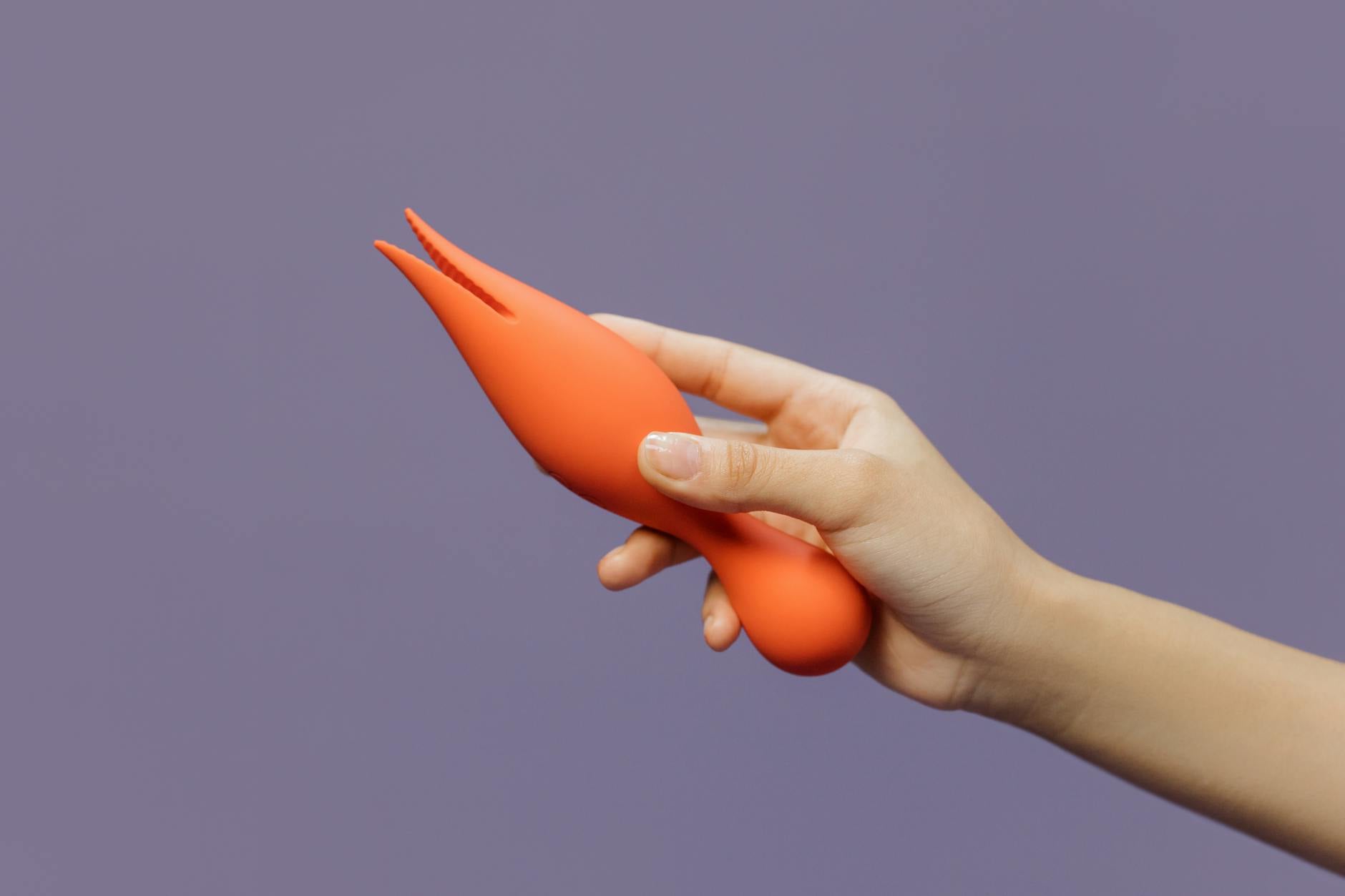
Let's talk about what nobody mentions
You've been using your lemon vibrator faithfully. It feels good. Then one day, it doesn't feel as good. The sensation is duller, slower to build, less intense. You assume something's wrong with you. Nothing is. This is desensitization, and it's completely reversible.
The reason no one talks about it openly is embarrassment mixed with confusion. People worry they've "broken" their body or become addicted to vibration. The truth is simpler: your nervous system adapted to repeated input, exactly as designed. The same thing happens to any repeated stimulus. Your brain literally stops paying attention.
How desensitization actually works
When you use a lemon clitoral vibrator, you're sending intense, consistent vibrations to nerve endings that evolved to detect much subtler sensations. The vibration frequency (typically 50-200 Hz on toys like Hello Nancy's Lem) is far higher and more regular than manual touch. Your clitoris has about 8,000 nerve endings concentrated in a tiny area, and they're designed to notice variation and novelty.
After repeated exposure to the same vibration pattern, those nerve endings stop firing as enthusiastically. This is called "receptor adaptation" or "habituation." It's not damage. It's not permanent. It's your nervous system being efficient. The signal stops being novel, so the response dampens.
This doesn't mean you need to quit using vibrators. It means you need breaks.
Why vibrators specifically trigger this faster
Manual stimulation involves micro-variations. Your hand changes pressure, rhythm, angle. Even if you think you're consistent, you're not. That variation keeps your nerve endings engaged and alert.
Vibrators deliver the exact same frequency and amplitude every single time. For some people using a lem vibrator daily or near-daily, desensitization can start within weeks. For others, it takes months. The timeline depends on baseline sensitivity, frequency of use, and whether you're rotating between different vibration patterns.
Here's the thing nobody mentions about lemon vibrators and similar air-suction toys: they're remarkably effective, which means people tend to use them more often and finish faster. That's great for pleasure in the moment. It's less great for maintaining long-term sensitivity.
The reset protocol that actually works
Take a break. This is the unglamorous truth. A true sensitivity reset requires stopping vibrator use for 2-4 weeks. Not just your lemon clitoral vibrator. All vibrators. All electric stimulation.
During that time:
Focus on manual touch. Hands, fingers, or a partner's fingers. Let your nerve endings remember what variety feels like. The goal isn't orgasm. It's re-sensitization. Use different pressures, speeds, and patterns. Inconsistency is the feature, not a bug.
Introduce temperature play. Ice cubes or a warming massage oil on the vulva. Temperature variation wakes up dormant nerve endings. This sounds gimmicky but it works.
Practice mindfulness without goal. Stop using vibration as a quick route to orgasm. Spend time just noticing sensation. This trains your brain to pay attention to subtler input again.
Check your stress levels. Chronic stress dulls sensation across the board. During a reset phase, sleep more and exercise more. Your nervous system can't recalibrate if you're running on empty.
After 2-4 weeks of this, reintroduce the lemon vibrator. Most people report a noticeable return to baseline sensitivity. It's like visiting an old favorite song after months of silence. The impact hits differently.
How to use vibrators sustainably going forward
Once you've reset, you don't need to live vibrator-free. You need rotation and intentionality.
Vary your tools. If you typically use a lem vibrator, add manual touch, a wand, or a different stimulation method into your routine. Different frequencies activate different sets of nerve endings. This keeps your body engaged.
Use vibrators strategically, not daily. This isn't a moral judgment. It's neurology. Three times a week is sustainable for most people. Daily use dramatically accelerates desensitization. Weekly use is even better if you're concerned about maintaining sensitivity long-term.
Rotate vibration settings. Don't use the same pattern every time. If your Lem has multiple settings, move between them. The novelty maintains neural engagement. This is especially important with air-suction toys, which deliver a very specific sensation. Pattern variation prevents the nervous system from tuning it out completely.
Pair vibrators with other input. Don't use the lem vibrator in isolation. Layer it with manual stimulation, partnered touch, or mental focus. Multi-sensory input resists habituation better than single-modality input.
What this means for your relationship to pleasure
Desensitization isn't failure. It's feedback. It's your body telling you it needs variety. The people I work with who feel most satisfied with their sexual pleasure long-term are the ones who treat vibrators as one tool in a broader toolkit, not the primary tool.
This matters especially if you're in a long-term partnership. When someone relies exclusively on a lemon vibrator for orgasm, partnered sex can feel less satisfying by comparison. The intensity isn't there. This creates friction that has nothing to do with the relationship and everything to do with nervous system adaptation.
The reset protocol gives you a chance to rebuild that sensitivity and notice what non-vibrator touch feels like again. Many people find that doing this rebalances their whole sexual response.
Common reset mistakes to avoid
Don't half-commit. If you're taking a break, actually take a break. Using a vibrator once or twice during the reset phase resets your reset timer. Your nervous system counts. Be consistent.
Don't assume you're broken if sensitivity takes 3-4 weeks to return. Recovery timelines vary. Some people bounce back in two weeks. Others take six. This is normal variation, not a sign something's wrong.
Don't expect orgasm during reset. Many people find that manual-only touch during a sensitivity recovery phase doesn't produce orgasms at first. This is temporary. Your brain hasn't recalibrated to regard lighter stimulation as orgasm-worthy input yet. It will. Be patient.
Don't return to the same pattern. If daily vibrator use caused desensitization, returning to daily use will recreate the problem. You have to change the behavior that triggered it, not just take a break and resume.
When to see a specialist
If 4-6 weeks of reset doesn't produce noticeable sensitivity recovery, there might be something else going on. Hormonal changes (including birth control shifts), medications, stress disorders, or underlying medical conditions can dull sensation independent of vibrator use. A gynecologist or sex-specialized therapist can help sort this out.
Also, if you find yourself unable to stop using vibrators despite wanting to reduce use, that's worth exploring with a therapist. It's not addiction in the clinical sense, but it can indicate anxiety, avoidance patterns, or a hedonic treadmill effect that therapy can address.
The bottom line
Your body hasn't abandoned you. Your nervous system just adapted to repeated input, exactly as nervous systems do. Take a strategic break, reintroduce variety, and use vibrators sustainably. Your clitoris will thank you. Your long-term pleasure will too.
People also ask
How long does it take for clitoral sensitivity to come back after vibrator desensitization?
Most people notice measurable recovery within 2-3 weeks of vibrator abstinence. Full sensitivity recovery typically takes 4-6 weeks. This varies based on how frequently you were using vibrators, your baseline sensitivity, and overall stress levels. Some people recover faster. Others need the full month. Consistency matters more than speed here.
Is vibrator desensitization permanent?
No. Desensitization is completely reversible. This is important: your nerve endings aren't damaged. Your nervous system simply adapted to repeated input. Once you remove that input, adaptation reverses. You don't need medical intervention. You need time and behavioral change.
Can I use my lemon vibrator less frequently to prevent desensitization?
Yes. Reducing frequency from daily to 2-3 times per week significantly slows habituation. Rotating between different vibration patterns also helps, since novelty resists adaptation. The key is avoiding the same stimulus in the same way repeatedly. If you love your lemon sucker toy, using it with variation and intention prevents the problem from developing.
Does sensitivity come back immediately after taking a break from vibrators?
No. Sensitivity returns gradually over days and weeks, not overnight. You'll likely notice subtle changes first. A vibration that felt muted might start feeling distinct again. Manual touch that felt boring might feel interesting. The shift is progressive, which is why a full 2-4 week break gives you the clearest picture of recovery.
What if I use my clitoral vibrator with a partner during the reset?
If you're in a partnership, partnered touch is actually ideal during a reset. That variation retrains your nervous system. What you want to avoid is solo vibrator use. If you're using a lem vibrator during partnered sex a couple times during the reset period, that's fine as long as you're also doing manual and partnered non-vibrator touch to maintain variability.
Should I replace my lemon vibrator with a different toy to regain sensitivity?
Not necessarily. You can keep the same vibrator and regain sensitivity through rotation, breaks, and pattern variation. That said, some people find that switching to a different toy for a while (lower frequency, different sensation type) helps with the reset process by introducing genuine novelty. If you love your Hello Nancy lemon clitoral vibrator, you don't need to replace it. Just use it strategically.
For more on vibrator technique, explore how to use a lemon vibrator if your clitoris is sensitive. For relationship context, read about why lemon vibrators feel different after 40 and how to rebuild intimacy with tools like the lem vibrator.