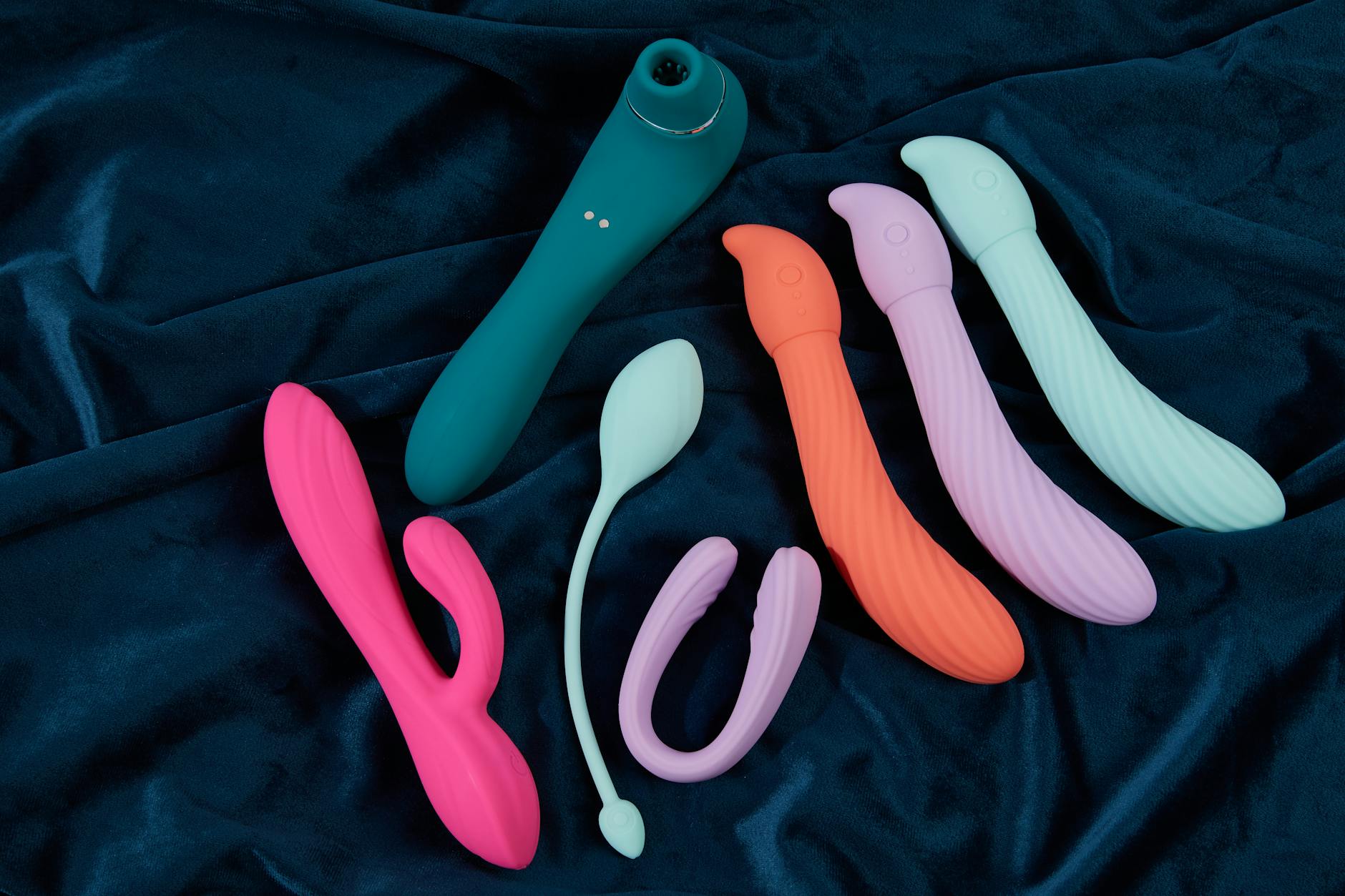
Should You Use a Lemon Vibrator During Partnered Sex?
Here's the thing: most couples never talk about this until someone's already uncomfortable. Then it becomes a whole conversation about adequacy, shame, or what it means about the relationship. None of that needs to happen.
The real question isn't whether you should use a lemon vibrator with a partner. It's whether you're both actually interested, and whether you've actually said that out loud. Let me walk you through both.
The myth that needs to die
There's this persistent idea that bringing a toy into partnered sex means something's missing. That you're not enough, or they're not enough, or the relationship isn't working. This is completely backwards. A clitoral vibrator is a tool, not a judgment. Most vulva-havers can't reliably orgasm from penetration alone—that's physiology, not a personal failing. Adding a lemon vibrator doesn't diminish your partner's role. It actually gives both of you the chance to experience more pleasure together.
I've worked with hundreds of couples, and the ones who use toys with confidence report higher sexual satisfaction, more orgasms, and ironically, deeper emotional connection. Not because the toy is magical, but because they had to communicate clearly to make it work. That communication is the real intimacy.
When the conversation actually needs to happen
Timing matters here. Don't bring this up mid-sex, and don't spring it as a surprise. The best moment is outside the bedroom, when you're both relaxed and there's no performance pressure. You might say: "I've been thinking about trying a lemon vibrator during sex, and I'd love to hear what you think." That's it. You've stated your interest, invited their input, and left space for them to ask questions without anyone having to defend themselves.
Watch for their reaction. Are they curious? Hesitant? Worried it means you're not satisfied? That last one is common, and it deserves a direct answer: "This isn't about you. Orgasms during partnered sex work differently for me, and I want us both to have more pleasure." Most partners get this immediately. Some need more reassurance. That's fine. It means you get to have the conversation now instead of the resentment later.
If they're genuinely not interested, you have a choice to make. You can use it solo, or you can keep exploring what they're actually worried about. Sometimes "no" is really "I don't know how to use it" or "I'm worried I'll do it wrong." Those are solvable problems.
The positioning question (everyone wonders this)
How do you physically make this work? There are three main setups, depending on what you're doing.
During penetration from behind. Your partner enters from behind while you (or they) hold the lemon vibrator against your clitoris. This is probably the most straightforward. You get steady penetration, direct clitoral stimulation, and you can control the vibrator's intensity. Your partner can focus on depth and rhythm without worrying about accidentally knocking the toy away.
During face-to-face penetration. This one takes a bit more coordination. You'd hold the vibrator yourself, or your partner could hold it while they're inside you. The benefit here is you get eye contact and body contact, which matters emotionally for a lot of people. The trade-off is that someone's hand is occupied, so you're working with less freedom of movement.
During oral sex. This is genuinely underrated. Your partner uses their mouth while you hold the lemon vibrator, or they hold it. The vibration combined with tongue creates a completely different sensation than either alone. Some people find this is the fastest way to orgasm, and the emotional intensity is higher because there's less performance anxiety (the toy is doing a lot of the work, so your partner isn't responsible for the outcome).
Start with whatever position feels least complicated to you. You can explore others as you get more comfortable.
Managing the practical stuff
A few things nobody mentions until you're mid-sex and frustrated:
Whose hand holds it. If you hold the vibrator, you're in control of pressure and positioning, which is usually what you want. If your partner holds it, they need feedback. "A little higher," "Same spot, slightly less pressure." Some people find it hot to give these directions. Others find it distracting. Figure out which you are before you're already going.
Communication during. You need a way to say "that's not working" without killing the mood. A simple "a bit different" or "right there" usually does it. Anything more than that, and you might need to pause for ten seconds and adjust. That's completely normal. Sex with a partner is collaborative, not a performance.
Battery timing. Check that your lemon vibrator is fully charged before you start. Running out mid-session is annoying and breaks focus. If you're using it with a partner regularly, charge it after each use, the same way you'd brush your teeth. It takes two minutes and saves you frustration.
Cleanup. Most silicone toys can be rinsed with warm water and mild soap. Do this right after, when you're still nearby. Don't let it sit in the sheets overnight. That's the difference between "toy is always ready" and "toy needs maintenance in the middle of sex."
What if your partner feels threatened
This is real, and it shows up in a few ways. Maybe they worry the toy will replace them. Maybe they're embarrassed they didn't "make" you come. Maybe they're just not used to talking about sex this openly, and the vulnerability feels scary.
The most useful thing you can do is reframe this as addition, not substitution. You're not saying, "I need the toy instead of you." You're saying, "I want to experience more pleasure with you, and this is how." There's a huge difference. The first is rejection. The second is invitation.
If they're still struggling, you might both benefit from exploring how to use a lemon vibrator with a partner more deeply, which addresses some of the emotional dynamics in more detail.
Why some couples thrive with this
I've noticed a pattern over the years. Couples who successfully integrate toys into partnered sex have usually done one thing: they've separated the toy from their self-worth. They're not using it because someone failed. They're using it because pleasure is the point, and they want more of it. That's it.
The secondary benefit is that they've learned to communicate about sex without shame. That skill transfers everywhere. They talk about positions, timing, fantasies, what didn't work last week. Sex stops being this mysterious thing that either happens or doesn't, and becomes something they actually collaborate on.
One more thing: if penetrative sex with a lemon clitoral vibrator isn't doing it for you, try different vibrator settings or patterns. Sometimes it's not the toy or the partner. It's the rhythm or intensity. A small adjustment can change everything.
The one thing to know if you've never done this before
Your first time using a toy with a partner will feel slightly awkward. This is completely normal. It's a new thing you're doing together, and new things are always a bit clumsy. That awkwardness isn't a sign it won't work. It's just the beginning of familiarity. By the third or fourth time, it'll feel natural. By the tenth time, you won't remember why you were ever nervous.
Give yourself and your partner that grace. Sex is collaboration, not performance, and collaboration takes practice.
Frequently asked questions
What if my partner wants to use the vibrator on me but I prefer to do it myself?
Just say that. "I like having control over the pressure and positioning, so I'll hold it." Your partner doesn't have to hold every part of sex for it to be partnered. Sometimes the sexiest thing is seeing your partner take their own pleasure seriously.
Is it normal to orgasm faster with a vibrator than without one?
Completely normal. A lemon vibrator provides consistent, direct stimulation that manual touch can't always match. That doesn't mean manual touch is worse—it's just different. Different isn't bad. It's just different. Use whichever gets you there.
Should I tell my partner how to use the toy, or let them figure it out?
Tell them. Guidance isn't criticism. Say, "I like it when you start slow and build up," or "A little higher helps me get there." This is information, not judgment. Partners generally want to do things that work.
What if we try it and it doesn't feel good?
Then you stop and try something else. Sex isn't a test you have to pass. If penetration plus vibration doesn't work, maybe it's vibration during oral, or just vibration solo while your partner watches. There's no single right way.
Can I use a lemon vibrator if I have a sensitive clitoris during partnered sex?
Yes, and there are specific techniques for sensitive clitoral stimulation that work equally well with a partner present. You control the intensity and pattern, so your needs stay centered.
How do I know if my partner is actually comfortable with this?
Ask directly. "Are you into this?" "Do you feel good about trying it?" Watch their body language. Are they relaxed or tense? Are they engaged or checking out? Your partner should want this too, not just tolerate it. If they're tolerating it, keep talking.
The closing thought
Using a lemon vibrator during partnered sex isn't complicated. It's actually simpler than you think. What makes it feel complicated is shame—the idea that good sex shouldn't need tools, or that wanting this means something's wrong. That's the only thing standing between you and more pleasure.
Talk to your partner. Have the conversation outside the bedroom. Give yourself permission to be a little awkward the first time. Then notice how quickly awkward becomes normal, and normal becomes something you both actually look forward to.
Your pleasure matters. Your partner's pleasure matters. The tool is just a tool. The real work is the conversation, and you've already started it by reading this.