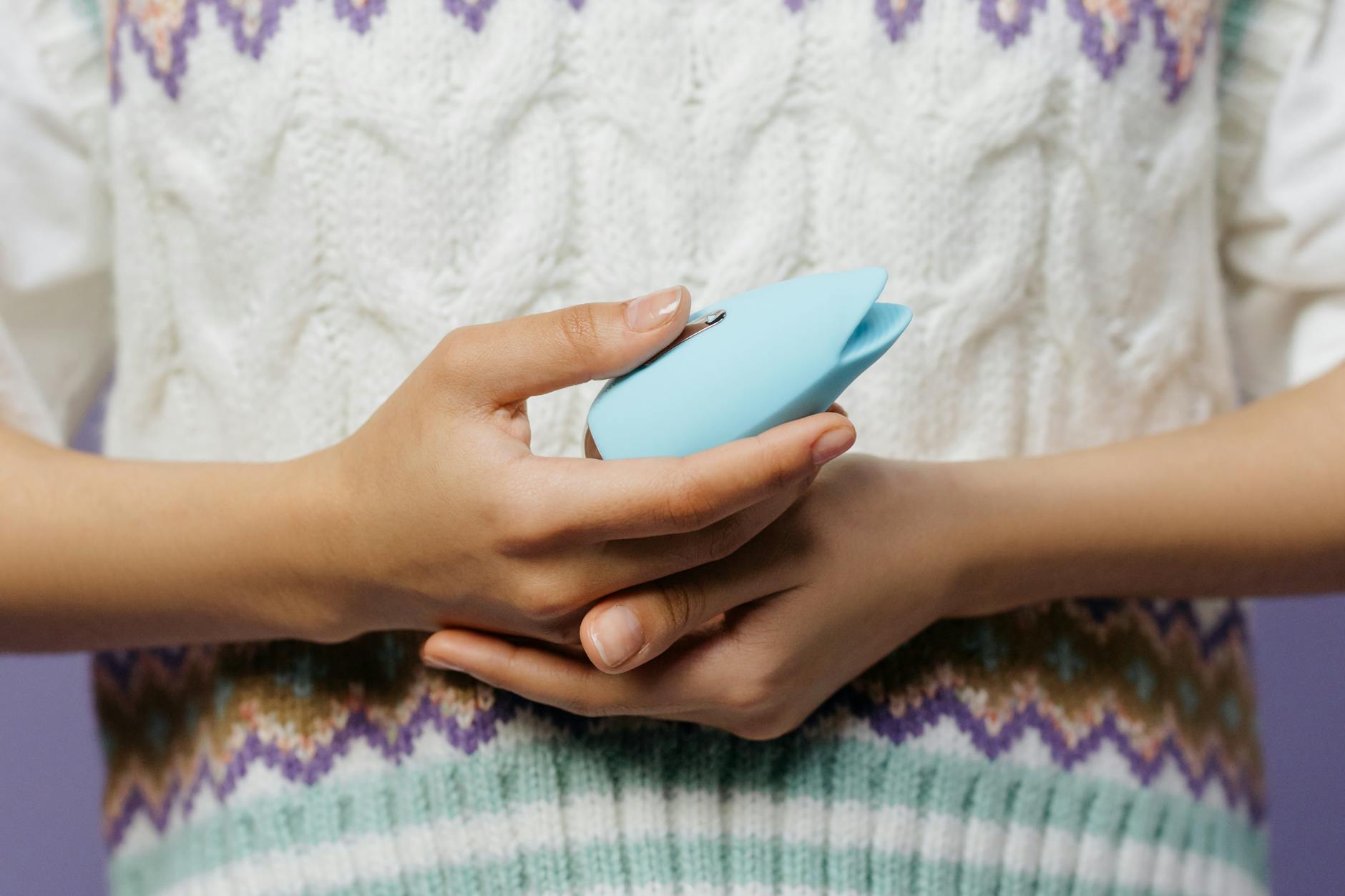
Your clitoris has a rhythm you probably haven't noticed yet
Here's something most people never learn. Your clitoris doesn't respond the same way every day of your cycle. It swells and softens. It becomes more or less sensitive to direct touch. The amount of pressure that feels amazing on day 10 might feel too intense on day 23. This isn't broken. This is hormones doing exactly what they're supposed to do.
Yet most people grab their lemon vibrator and wonder why the same setting that worked last week now feels either disappointingly numb or wildly overstimulating. They blame the toy. They blame themselves. They don't know to blame hormonal shifts.
What's actually changing in your body
Estrogen and progesterone don't just affect your mood or your periods. They reshape blood flow to your genitals, they alter nerve sensitivity, and they influence how quickly your tissues swell during arousal. During the follicular phase, when estrogen is climbing, your clitoris typically becomes more engorged and more responsive. By the luteal phase, when progesterone takes over, tissues soften and sensitivity often dips slightly.
This means the clitoral vibrators you rely on, like a Lem, work best when you adjust for where you are in your cycle. It's not complicated. It just requires paying attention.
The cycle breakdown for lemon vibrator users
Days 1 to 5: Menstruation
Your clitoris is less swollen right now. Blood flow is actually redirected. Many people report that direct stimulation feels uncomfortable during menstruation, not because anything is wrong but because the tissues are more fragile and less cushioned by estrogen.
If you want to use your lemon clitoral vibrator during your period, go lower on the intensity dial. Patterns 1 or 2 on a Lem feel better than patterns 4 or 5. Consider longer warm-up time. Some people skip direct clitoral stimulation entirely and focus instead on vulvic massage or internal sensation. That's also completely valid.
Days 6 to 13: Early follicular
Estrogen begins climbing and your clitoris is waking up. Sensitivity is increasing but not yet peaked. This is a goldilocks window. Medium intensity feels right. If you've been holding back, you can usually access pattern 3 or 4 on your lemon vibrator without overshooting.
Days 14 to 15: Ovulation
Your estrogen hits its highest point. Your clitoris is maximally engorged. This is when many people report the most intense orgasms and the fastest climax times. Your lemon vibrator can go higher. Patterns 5 or even pulse modes feel good. You might orgasm faster than usual. That's not a sign of anything. It's just what happens when your hormones are at their peak.
Days 16 to 28: Luteal phase
Progesterone rises and estrogen falls. Your clitoris becomes less engorged. Sensitivity decreases. This is often when people think their lemon vibrator is broken because the setting that worked during ovulation now feels too strong. It's not. Your body has simply shifted. Dial back to patterns 2 or 3. Extend your warm-up time. Use more lubrication. Everything still works. The settings just change.
How to track your own pattern
Your cycle isn't someone else's cycle. Hormone levels vary wildly between people. Some people have exaggerated sensitivity shifts. Others barely notice a difference. The only way to know your own pattern is to track it.
For one full cycle, keep a simple log. When you masturbate, note the date and which pattern you used on your lemon vibrator. Note how long it took to orgasm. Note whether it felt good, meh, or uncomfortable. After one full month, patterns will emerge. You'll see that day 16 always needs lower intensity. You'll notice ovulation week is when you can access your favorite patterns without hesitation.
This takes about 10 minutes per month. The payoff is that you stop second-guessing yourself and start working with your body instead of against it.
Partner sex and cycle-tracking during intimacy
If you use a lemon vibrator with a partner, your cycle matters to them too. Specifically, how present you are during sex depends partly on whether you're forcing stimulation that your body isn't ready for.
Many couples unconsciously default to whatever worked last time without realizing the calendar has shifted. Then they interpret a slower response as distance or waning desire when it's actually just physiology. Having a conversation about where you are in your cycle removes that friction. You might say, "I'm in my luteal phase so I need longer warm-up and lower intensity." Your partner adjusts. Everyone has better sex.
You don't need to make a production of it. But you also shouldn't hide this information. How to Use a Lemon Vibrator When Your Partner Wants Toys But You're Self-Conscious covers this in more detail.
The stress variable that complicates everything
Hormones are the main story here, but they're not the only story. Stress, sleep, hydration, and emotional state all impact clitoral sensitivity on a week-to-week basis. You might be in peak estrogen week but also recovering from a brutal work deadline. Sensitivity might dip more than expected.
This is why rigid cycle tracking can feel limiting. Use the cycle framework as your baseline. But if something feels off, run through the checklist. Have you been sleeping well? Are you stressed? Have you been drinking enough water? Sometimes adjusting one of those variables unlocks way more sensitivity than any pattern change can.
The biggest mistake people make
They assume the lemon vibrator itself is the problem. They upgrade to a different toy. They wonder if they've become desensitized. They don't realize they're still using the same pattern they used three weeks ago when their hormones were completely different.
Your Lem clitoral vibrator is fine. Your body is just asking for a different approach depending on the day. That's not a flaw. That's information.
FAQ: sensitivity shifts and lemon vibrators
Why does my lemon clitoral vibrator feel too intense right before my period?
Your progesterone is high and estrogen is dropping. Your clitoris is less swollen and the tissue is more sensitive to mechanical stimulation. This is actually the time when many people report that direct pressure feels irritating rather than pleasurable. Try pattern 1 or 2 instead of your usual setting, and use more lubricant. You might also prefer indirect stimulation, like vibrating the area above your clitoris rather than directly on it.
Can I really have better orgasms during ovulation with a lemon vibrator?
Yes. Peak estrogen creates ideal conditions for arousal and orgasm. Your clitoris is maximally engorged, your tissues are most responsive, and your nervous system is primed for pleasure. Many people report faster times to orgasm and more intense sensation during this window. This is why ovulation week feels noticeably different if you're paying attention.
Does birth control change how my lemon vibrator feels?
Completely. Hormonal birth control suppresses the natural rise and fall of estrogen and progesterone. This means your clitoral sensitivity stays relatively flat across the month. Some people on hormonal birth control report that they need slightly higher intensity than they did before starting the pill because the baseline sensitivity is lower. Others report no change at all. Track your own experience rather than assuming. Non-hormonal methods like the copper IUD won't affect this pattern.
What if I don't have a regular cycle?
Irregular cycles make pattern-tracking harder but not impossible. You might be tracking based on symptom clusters instead of calendar days. When do you feel most aroused? When does clitoral touch feel best? When does it feel too intense? Use those anchors instead of dates. Over time, you might notice that certain combinations of feelings reliably correspond to certain sensitivity levels.
Is there a best time in my cycle to start using a lemon vibrator for the first time?
Not really. Start when you feel like it. But be aware that if your first experience happens during your luteal phase, you might have a muted response compared to what the same toy would feel like during ovulation week. This can make people think they don't like clitoral vibrators when actually they just started at a low-sensitivity time. If your first experience feels underwhelming, try again during ovulation week before deciding it's not for you.
Can I use my lemon sucker vibrator if I have a really short cycle?
Yes. A short cycle just means your hormonal swings happen in a compressed timeline. You'll still notice sensitivity shifts. They'll just happen faster. Tracking becomes even more useful because the pattern becomes more obvious. Instead of changes spread across 28 days, you're seeing them in 21. That actually makes it easier to connect cause and effect.
The bottom line on lemon vibrators and your cycle
Your pleasure is not static. It changes with your hormones, your stress, your sleep, and your emotional landscape. Using a lemon clitoral vibrator well means adjusting to those changes instead of fighting them. Track what works on different days. Talk to your partner about where you are in your cycle. Use lower intensity when tissues are fragile. Use higher intensity when you're maximally aroused. Your body knows what it needs. The vibrator is just the tool you're using to listen.
Want more specific guidance on integrating a lemon vibrator into your routine? How to Use a Lemon Vibrator When Building Pleasure From Scratch walks through that process step by step. Or if you're navigating sensitivity changes with a partner, Why Lemon Vibrators Feel Different With Longer-Term Partners covers the relationship side of this equation.