Here's what nobody tells you about partner anxiety and sex
When your partner is anxious during intimacy, the pressure flows both directions. You're trying to relax them, they're trying to perform, and the whole experience becomes a minefield of "am I doing this right?" For both of you. The irony is that adding a lemon clitoral vibrator doesn't solve anxiety directly. But it does something more useful: it removes the performance expectation altogether.
Anxiety thrives on pressure. It feeds on the silent question: "Can I make this work?" A lemon vibrator shifts that question from them to the device. Suddenly, pleasure isn't dependent on their effort or timing. You get to feel good regardless. And that paradoxically makes them feel better.
I've worked with couples where introducing a lem vibrator was the turning point. Not because the toy was magic, but because it changed the conversation from "Am I enough?" to "How do we feel good together?"
Why anxiety specifically disrupts partnered sex
Sexual anxiety in a partner usually stems from one of three places. Performance pressure from past experiences. Fear of being judged or rejected. Or concern that they can't "get you there" without help. All three are about control. They think they need to control the outcome to prove their worth.
When anxiety is high, blood flow redirects away from the genitals and toward the muscles. Arousal stalls. Erections disappear. Lubrication dries up. The body is literally in fight-or-flight mode. No amount of reassurance in the moment fixes this because reassurance still puts them in the spotlight.
What actually helps is redirecting attention away from their performance and toward shared pleasure. A lemon vibrator does this silently.
The exact way to introduce it without triggering more anxiety
Timing and framing are everything. Don't introduce it when anxiety is already peaked. Save it for a moment when you're both relaxed, clothed, and having a normal conversation. Not in bed. Not right before sex.
Say something like: "I've been thinking about what would feel better for me during sex, and I want to try something that might actually take pressure off both of us." Notice that sentence. It's about you. It's about reducing pressure. It's not "your anxiety is a problem we need to fix."
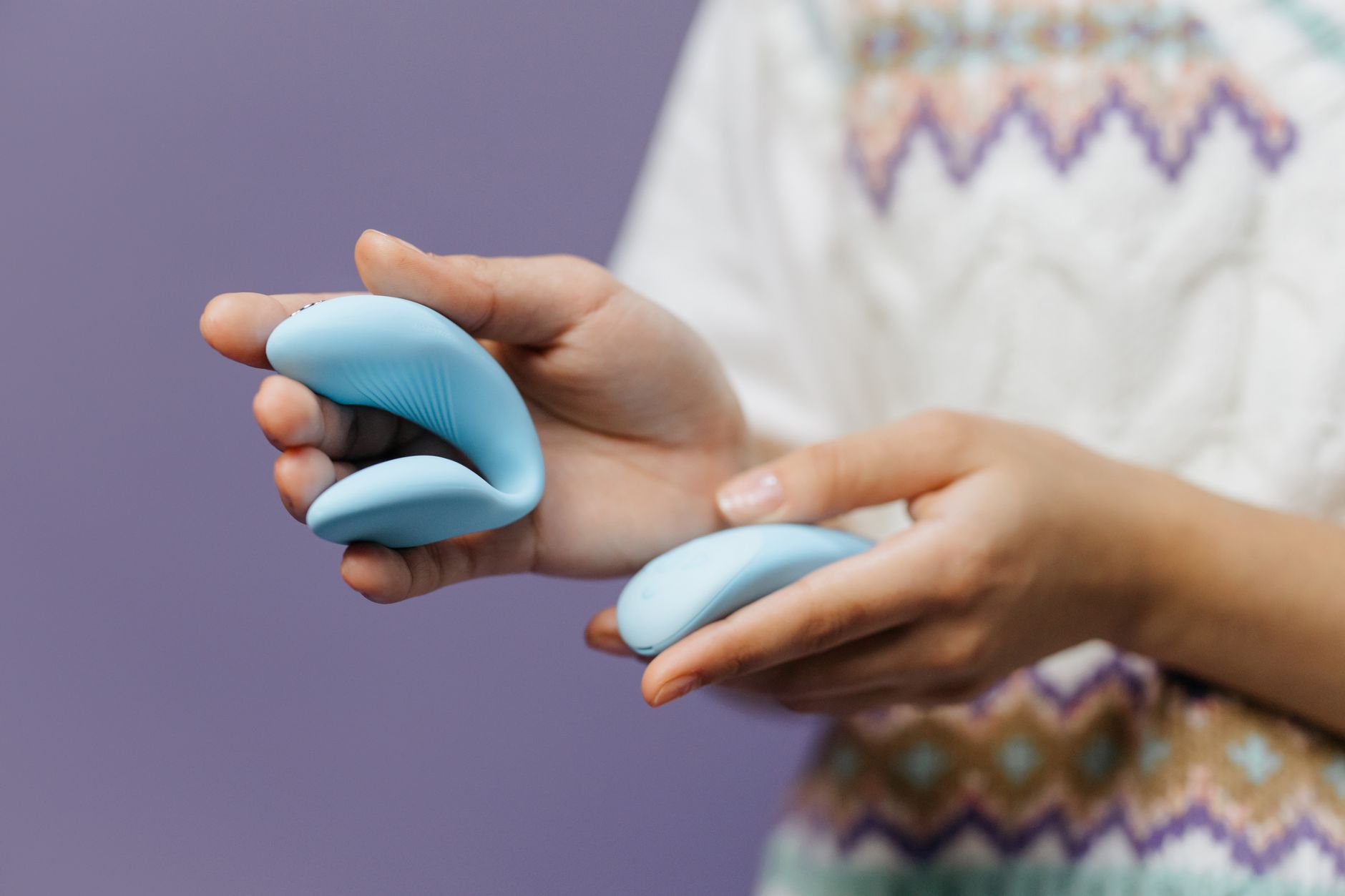
Show them the lemon vibrator. Let them hold it. Explain that you want to use it because it gives you a type of stimulation that's hard for your body to get otherwise. This is the truth. It also happens to be the truth that removes blame or inadequacy from the picture.
You might add: "It means you get to focus on what feels good for you, and we both win." Again. Pressure off.
The first time using it together: pacing matters
Start slow. I mean slower than you think. Don't jump straight to intercourse with the vibrator involved. First time, maybe you use it during foreplay while they focus on a different part of your body. Hands, mouth, whatever. This gives them something to do that matters while the vibrator does its job.
This is crucial: their anxiety often includes fear of being left out or replaced. If you're using the lem vibrator and they're just watching, anxiety spikes. But if they're actively touching you somewhere else? They feel like a participant, not a spectator.
Start on a lower intensity setting. Patterns 1 through 3 on most lemon clitoral vibrators. You're not trying to climax immediately. You're just getting comfortable with the sensation while they get comfortable with the device being present.
If they seem tense, pause. Check in. "How are you feeling?" Not "Is this okay?" Feeling gives them permission to be honest about emotion, not just logistics.
Building confidence over multiple sessions
Anxiety doesn't disappear because you used a vibrator once. But confidence grows with repetition. Each time you have pleasure with them present, even when the lemon vibrator is part of it, the brain starts to rewire. "This is good. This works. I'm not failing."
After a few sessions, you might move to using the vibrator during intercourse. Again, this takes the pressure off them because they're not solely responsible for your pleasure. They can focus on their own sensation without the anxiety of "am I hitting the right spot?"
Many partners find that when they're less focused on your orgasm, they actually relax enough to enjoy their own. Anxiety is incredibly distracting. When the vibrator handles stimulation, their nervous system genuinely settles.
What to do if they resist or get more anxious
Some partners hear "vibrator" and interpret it as "you're not enough." This is the anxiety talking, not reality. If resistance happens, pause the whole thing. Don't push.
Instead, frame it differently. Go back to your own pleasure and what helps you specifically. "I've noticed I can orgasm more reliably with this type of stimulation. It's not about you. It's about my body and how it's wired." You're being completely truthful. You're also removing them from the equation.
If they're still resistant after a genuine conversation, there might be deeper stuff going on. Past trauma, deep insecurity about masculinity or femininity, or control issues. That's beyond what a lemon vibrator can fix. That's when you might suggest couples therapy together.
The longer-term shift that actually happens
Here's what I see in couples who move through this successfully. The anxiety doesn't vanish. But it stops controlling the bedroom. Sex becomes about connection again instead of performance. Your partner starts to see that their pleasure and your pleasure aren't a zero-sum game.
Over time, many partners get curious about what the vibrator actually feels like. Some want to try it on themselves. Some want to hold it while you use it, which deepens the feeling of participation. Some just relax knowing that you're getting what you need.
The real win isn't the vibrator itself. It's the shift from "Can I make this work?" to "We're making this work together." And that matters way more than any single device.
When anxiety runs deeper
If your partner has clinical anxiety or has experienced sexual trauma, a vibrator isn't the solution. It's context. The real work happens in therapy, ideally with someone who specializes in sexual anxiety or trauma. A lemon clitoral vibrator can be part of a broader toolkit, but it's not a replacement for professional support.
If they're on medications that affect arousal or sexual function, that's also worth discussing with a doctor. SSRIs, for example, are famous for dampening libido and making orgasm difficult. There are often alternatives that work just as well for anxiety without the sexual side effects.
The conversation that actually rebuilds intimacy
Using a lemon vibrator with an anxious partner works best when it's paired with honest communication. Not just about the device. About what you actually want and need. About what they fear. About what sex actually means to both of you.
Anxiety often hides underneath assumptions. "They must want me to fail." "They're disappointed in me." "I'll never be good enough." None of those are true, but anxiety doesn't care about truth. It cares about stories.
The vibrator is just the opening. The real magic is the conversation that says: "I want to feel good. I want you to feel good. And we can both have that without you carrying all the pressure." Once that lands, the lem vibrator becomes less about a workaround and more about a celebration of pleasure you're having together.
FAQ: Anxiety, vibrators, and couples
Will using a vibrator make my partner feel more inadequate?
Only if you frame it that way. If you introduce it as "you're not enough," yes. If you frame it as "this is what my body needs," and you use it in a way that includes them actively, most partners actually feel relieved. The pressure lifts. That usually feels better than inadequate.
How do I know if my partner's anxiety is sexual anxiety or something else?
Sexual anxiety specifically shows up during intimate moments. Difficulty getting aroused, going soft, staying focused. It might also show up as avoidance (making excuses not to have sex). If your partner is anxious in all areas of life, that's general anxiety. If it's mainly during or leading up to sex, that's sexual anxiety. Both deserve attention, but the root is different.
Can a lemon vibrator actually help with performance anxiety for my partner?
Indirectly, yes. By removing the performance expectation, it lets their nervous system relax. When they're not in fight-or-flight, blood flow returns, arousal builds more naturally, and performance improves. But the vibrator isn't fixing the anxiety itself. It's just creating space where anxiety can settle.
What if my partner wants to use the vibrator too?
That's fantastic. Some people with penises enjoy vibration on the shaft, head, or perineum. Some just want to hold it while you use it because it makes them feel connected. Honestly? Let them explore. It usually means the anxiety is easing because they're curious instead of defensive.
Is it normal for anxiety to get worse after introducing a vibrator?
Sometimes, initially. The unfamiliarity itself can trigger anxiety. That's why pacing is so important. Low intensity, include them actively, check in often. If anxiety stays elevated after a few sessions, that suggests something deeper is going on. Consider pausing and having a bigger conversation, or seeing a couples therapist.
How long before the anxiety actually improves?
Varies wildly. Some couples see a shift in one or two sessions. Others need months of consistent, anxiety-aware intimacy before things relax. There's no timeline. What matters is that both of you are moving in the same direction and talking about what's happening along the way.
The real bottom line
A lemon vibrator isn't a relationship fix. But in the context of a partner who has sexual anxiety, it's a tool that removes the pressure cooker dynamic. It lets you both feel good without turning sex into a performance evaluation.
If you're struggling with a partner's anxiety in the bedroom, start with the conversation before you introduce any device. Get curious about what they're actually afraid of. Then, if you do bring in a vibrator, frame it as something for you, involve them actively, and go slowly. That combination shifts almost everything.
For support navigating couples intimacy more broadly, reach out to us. And if you're looking for more specific guidance on using lemon clitoral vibrators in different relationship contexts, check out our guide on using a lemon vibrator solo when you have a long-term partner. Sometimes understanding your own pleasure first makes partnered pleasure so much easier.