
Why a break actually resets the clock
Honestly though, this one surprises most people. You'd think months or even years away from sex would mean your body has forgotten how to respond. Instead, many folks report that when they come back to pleasure after a real hiatus, a lemon vibrator (or any clitoral vibrator, really) feels wildly more intense than they remembered. Not in an overwhelming way. In a "oh wow, I forgot this was possible" way.
There's real physiology here. When you're not regularly engaging in sexual activity, a few things happen in your favor. Your nervous system actually recalibrates. The pathways that fire during arousal get a chance to rest and reset, which means when you reactivate them, they fire with more voltage.
The nervous system reboot
Your clitoris contains roughly 8,000 nerve endings. Over time, with consistent stimulation in the same way (say, with a partner's touch or a specific toy), those nerves can develop what feels like a rhythm or expectation. They're still working, but they're habituated. Your brain stops registering the signal as novel.
A real break, though, actually breaks that feedback loop. Those nerve pathways calm down. The receptors reset. When you reintroduce stimulation after weeks or months, especially with something like a lemon clitoral vibrator that uses suction patterns rather than traditional vibration, your nervous system treats it almost like the first time. It's heightened. It's alert.
I've worked with dozens of clients who took breaks from partnered sex due to life circumstances, health issues, relationship transitions, or just needing space. Almost universally, when they reengaged their own pleasure using a lemon vibrator, they felt sensations they thought they'd lost. They hadn't. They'd just been dormant.
Why suction beats memory
If you've used a lemon vibrator before and then took a break, you might expect to slide right back into your old patterns. But here's where it gets interesting. Suction-based lemon sexual toys work differently than what most people experience with a partner or with traditional vibrators. They don't rely on friction or repetitive buzzing at one frequency. They stimulate through rhythmic suction and release, which activates nerve clusters in a distinctly different way.
This matters when you're coming back to pleasure after time away. Your body doesn't remember "lemon vibrator" in a way that dulls the experience. In fact, many people find that the suction patterns on a lemon clitoral vibrator feel brand new even if they've used one before. The stimulation pattern is varied enough, subtle enough, and biomechanically different enough from partnered sex that it bypasses a lot of the habituation that happens with more traditional toys.
Psychological permission after absence
Let's not pretend the brain doesn't matter here. After a long break, especially after relationship loss, grief, illness, or just life getting too loud, pleasure often comes wrapped in some complicated feelings. There's guilt ("Am I allowed to want this?"). There's grief ("This used to be part of my life"). There's rust ("Will I even remember how?").
What I see clinically is that using a lemon vibrator solo after a real break actually helps dissolve some of that. You're not comparing yourself to a partner. You're not trying to fit into someone else's timeline or arousal arc. You're just you, in your own body, on your own schedule. That permission itself is powerful. The nervous system responds to safety and choice. After time away, you have both.
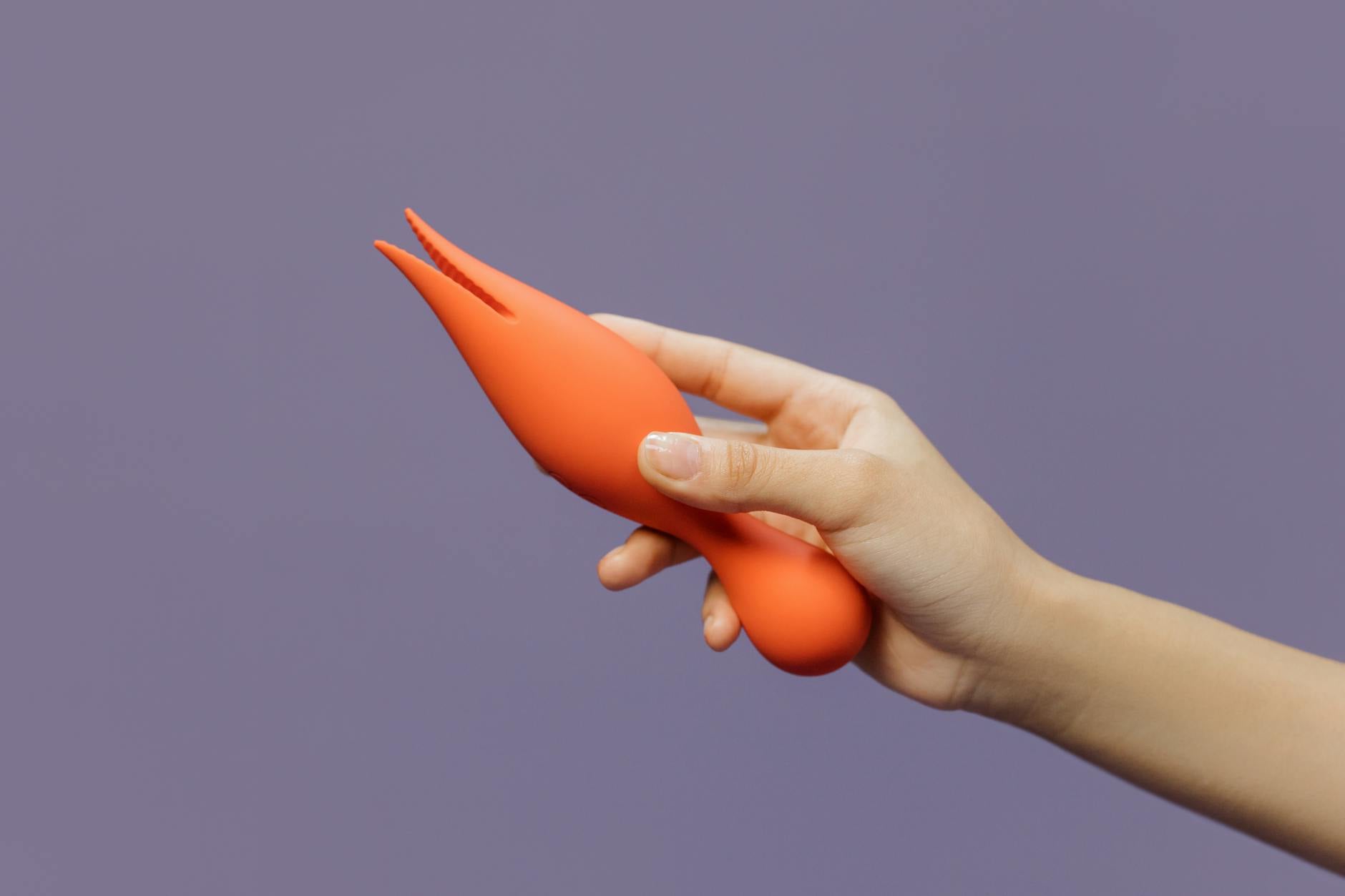
Photo by cottonbro studio on Pexels
How to rebuild without pushing
If you're reintroducing pleasure after months or years away, a few things help make it gentler and actually more satisfying.
Start with no expectation of orgasm. Seriously. The goal is sensation, not outcome. Use your lemon vibrator at a lower setting (if it has them), explore patterns you don't remember trying, notice what feels good without pushing toward climax. This sounds counterintuitive, but removing the performance pressure actually gets you there faster.
Set actual time. Don't try to squeeze this in between emails or after you're already exhausted. Give yourself 20 to 30 minutes when your body is rested and your mind is quieter. This isn't indulgence. This is recalibration.
Use the right lubricant. After a break, tissues can feel more sensitive initially. A good water-based lube reduces friction, increases sensation, and makes the whole experience feel less aggressive. It's not that you need it because something's wrong. You need it because you're starting fresh.
Track what changes. Most people find that over the first few weeks back, sensation actually evolves. What felt intense in week one feels different (not worse, just different) in week three. This is normal. You're not losing sensitivity. You're recalibrating to a new baseline.
When to reach out for support
If after a break, you find that nothing feels good, or if pleasure causes pain, that's not a sign you've broken something. It's a signal to check in with a healthcare provider. Sometimes after extended absence, there are physical factors at play. Pelvic floor tension, hormonal shifts, or previous trauma can become more noticeable when you try to reengage. That's not failure. That's information.
A good pelvic floor physical therapist or sex-positive gynecologist can help. So can a therapist who specializes in sexuality and relationships, especially if there's emotional complexity wrapped up in taking that first step back.
The return is rarely a straight line
One more real thing: after a long break, your arousal pattern might not snap right back to what it was. It might be different. It might be better. It might take longer to build initially, then accelerate. You might find you're more orgasmic than before, or less interested in the same things that used to work. All of that is okay. Your body isn't broken. It's just not the same body that left.
That's actually why a lemon vibrator feels so good to so many people rediscovering pleasure after a break. It's not asking you to be the person you were. It's meeting you where you are now. Whether you're using it solo, or eventually reintroducing it into partnered sex, you're starting from a place of choice and curiosity rather than muscle memory.
FAQ: Rebuilding pleasure after a sexual hiatus
Will my sensitivity come back after being away from sex for a long time?
Yes. Your clitoral nerve endings don't go anywhere. What changes is habituation at the nervous system level. After weeks or months away, when you reintroduce stimulation, those nerves essentially "wake up" and register sensation more vividly. Many people feel more sensation after a break than they did before it, at least initially. That heightened response typically settles into a new normal within a few weeks.
Should I use the same vibrator I used before, or try something new?
There's no wrong answer, but a lot of people find that trying something new (like switching to a lemon clitoral vibrator if they've never used suction) actually helps. It removes the "but I remember this feeling muted" narrative and gives your body a genuinely fresh experience. That said, if you loved a particular toy before, coming back to it can also feel grounding and familiar. Trust what feels right.
How long does it take to feel pleasure again after a long break?
Many people feel a noticeable shift within the first session or two. That said, "feeling pleasure" and "feeling like yourself again" are different timelines. Physical sensation might return quickly, but emotional ease around pleasure sometimes takes longer. Give yourself at least a month of regular (but not pressured) exploration before deciding something's wrong. You're rewiring, not just restarting.
Is it normal to feel emotional when using a lemon vibrator after time away?
Completely normal. Pleasure isn't purely physical. After a break, you might feel relief, grief, joy, sadness, or all of it at once. Your body and emotions are reconnecting. That's healthy. If feelings are overwhelming, slow down, breathe, and consider talking with a therapist who specializes in sexuality and embodiment.
Can I use a lemon vibrator with a partner after a long break, or should I do it alone first?
Both are valid. Some people find it easier to reconnect alone first, build confidence, and then invite a partner back in. Others find that reintroducing pleasure with a partner they trust actually helps emotionally. Talk to your partner (if you have one) about what feels right. If you do use a lemon vibrator with a partner after a break, focus on communication and going slow. Let your partner know what feels good and what doesn't in real time.
What if I feel numb or disconnected when I try again?
That's not uncommon, especially if the break involved trauma, grief, or medical treatment. Numbness can be physical (pelvic floor tension, hormonal) or psychological (protective dissociation). It's not permanent, but it usually needs attention. A pelvic floor physical therapist, a sex-positive therapist, or a specialized gynecologist can help you figure out what's happening and how to address it. Don't push through numbness. Work with it.
You're not starting over. You're starting fresh.
The difference matters. Starting over implies you've lost ground. Starting fresh means you're rebuilding from where you actually are now. Your body remembers pleasure even when your mind thinks it's forgotten. A lemon vibrator, with its distinct suction-based stimulation, can help you remember that. The return to your own pleasure after a real break isn't always easy, but it's rarely as hard as you think it'll be. Give yourself time, patience, and the right tools. You'll get there.
If you want to talk through what reengaging pleasure looks like for your specific situation, reach out. We're here to help.