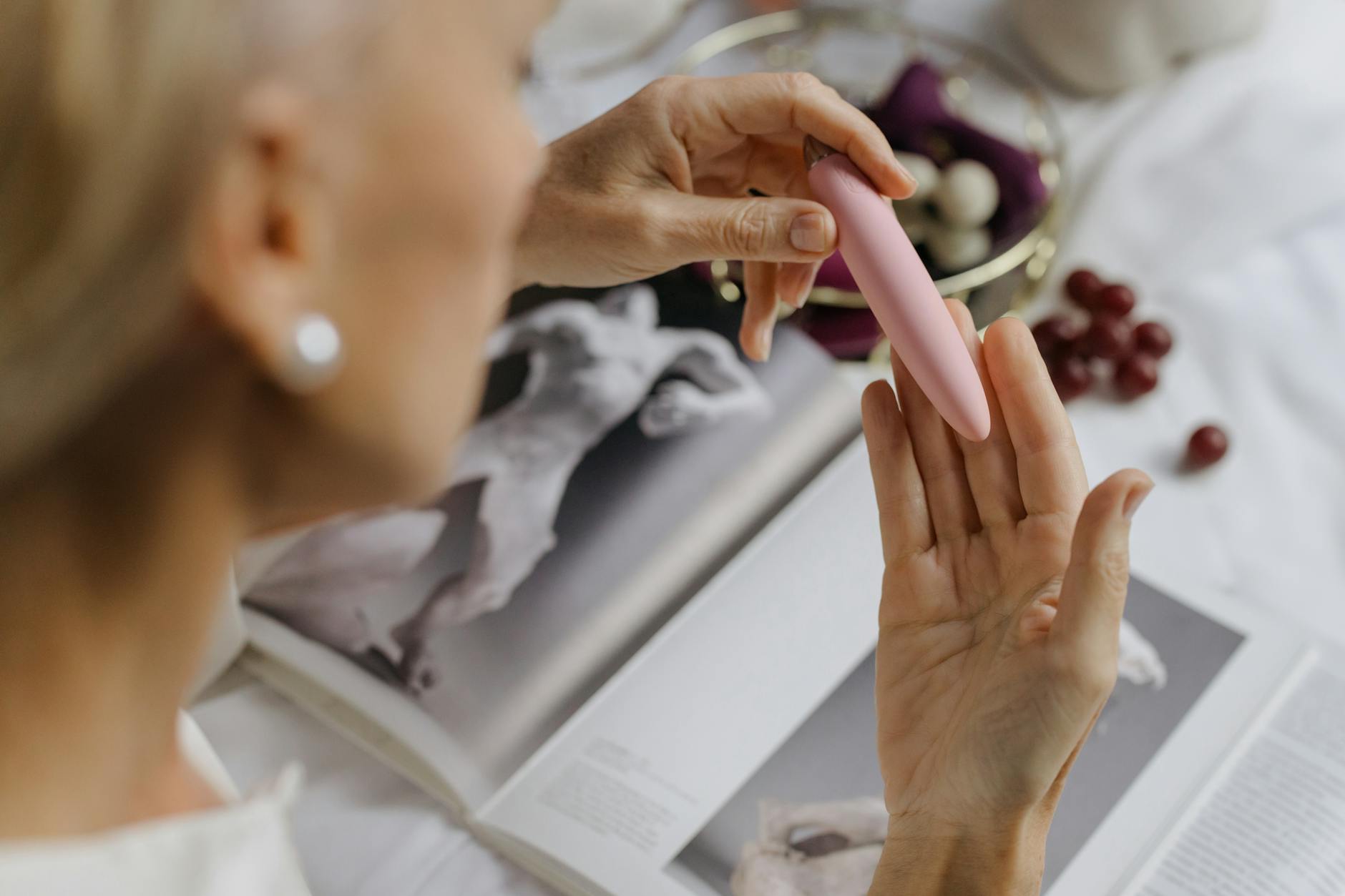
Let's be honest about what happens when body image gets in the way
Your partner doesn't want to be touched. Or they do, but only in the dark. Or they come to bed already apologizing for how they look. You want to bring a clitoral vibrator into the mix, thinking maybe it'll take some pressure off, maybe it'll make things feel different, maybe it'll help. And you're right that it could. But first, you have to understand that toys don't magically erase shame. They can amplify it just as easily.
Here's what I see in my practice: couples bring in a lemon vibrator or other sex toy hoping it'll fix the connection, when the real issue is that one partner feels invisible or judged in their own skin. The toy becomes either a band-aid or a wedge, depending on how it's introduced.
Why body image shame shows up in bed
Body image isn't really about your body. It's about what you believe your partner thinks of your body. That distinction matters because you can't fix it by saying nice things. You have to rebuild trust through consistent, non-sexual touch first.
When someone is self-conscious, their nervous system is in a low-level defensive state during sex. They're watching themselves, critiquing, bracing for judgment. The clitoris needs blood flow and relaxation to respond well. Shame does the opposite. It constricts. So a vibrator, even the best clitoral vibrator, will feel less intense, take longer to work, or feel weird because the whole system is clenched.
Add a toy into that mix without addressing the underlying trust, and your partner might feel like they're being replaced or that you're only interested in their orgasm, not them.
Start with non-sexual permission, not toys
If your partner struggles with body image, the first step has nothing to do with lemon vibrators or any sex toy. It's about touch that asks for nothing.
I mean 10 minutes a day where you touch your partner's body with zero expectation of arousal or sex. Not a massage toward sex. Not foreplay. Just skin contact. A hand on their shoulder while you're reading. Playing with their hair. Holding their leg. The goal is to slowly rewire their nervous system's association with being touched. Right now, they probably experience touch as either leading to sex (performance pressure) or being withheld (rejection). Neither builds confidence.
Do this for two to three weeks before you even mention toys.
When the time comes, frame it as something for them, not for you
This is where most people get it wrong. They say, "I want to use a vibrator on you," which can land as, "I need more to get you off," which can feel like criticism of their body or responsiveness.
Instead: "I've been thinking about how much I enjoy your pleasure. I heard that some people really like air-suction toys like the Lem because they work differently than anything else. Would you want to try it together just to see how it feels? Zero pressure. We can stop whenever."
Notice what that does: it centers their pleasure, removes the performance expectation, and gives them an exit route. That matters when someone is already anxious.
The actual setup that builds confidence
Lighting: dim or candlelit. Not dark like you're hiding, but warm like you're choosing this moment to be close. Your partner needs to feel seen, not concealed.
Clothes: Stay partially clothed for the first few times. I know this sounds counterintuitive, but stripping completely naked when you're already self-conscious is a lot. Let them keep a shirt on. Let your body be there but not fully exposed either. This removes the performance of "now we're having sex," which makes many people with body image stuff relax.
Your positioning: You should be able to make eye contact. Not the whole time. But often. If your partner can see that you're present, not grimacing or looking away or checking your phone, their nervous system settles. Your attention is the real aphrodisiac here, not the vibrator.
Start the lemon clitoral vibrator on the lowest setting. This is not the time to show them how powerful it can be. Slow and exploratory. Let them feel in control by asking, "Does this feel good?" and meaning it. Not checking a box. Actually asking.
If they're still in their head, use distraction strategically
Some people find that focusing on sensation is harder when they're already anxious. If your partner keeps sliding back into self-consciousness, try this: talk while you use the vibrator. Nothing heavy. Just conversation. A funny story. A memory you both like. Something that gives their thinking brain something to do other than critique their appearance.
This sounds weird, but it works because self-consciousness is a thinking brain activity. If you occupy that space with something warm and normal, the body can respond.
The conversation that matters more than the toy
After the first time, don't evaluate. Don't ask, "Did you like it?" as if there's a pass-fail grade. Instead: "I loved being close to you. That felt intimate to me."
You're reinforcing that the point was connection, not performance. That their body was worth your time and attention. That doing this together built something, not solved something broken.
If it didn't feel amazing, that's fine. Your partner's body might need more time to trust touch. They might feel more confident in three months. Or three years. The goal isn't to make them love vibrators. It's to show them that their pleasure matters to you and that their body, exactly as it is, is worth slow, attentive touch.
When self-consciousness is deeper than body image
If your partner consistently struggles with shame during sex, won't let you look at them, or becomes withdrawn afterward, that's worth exploring with a therapist. Sometimes what looks like body image stuff is actually trauma, depression, or a fundamental doubt about being lovable. A vibrator can't address that. Only connection and sometimes professional support can.
That's not a failure. That's you recognizing that the issue needs more than a new toy.
What to actually say if they're hesitant
"I see that you're nervous about this. That's okay. We don't have to do anything you're not comfortable with. I brought this up because I want you to feel good, not because I'm trying to prove anything or because I'm not happy with what we have. Your pleasure matters to me. Your comfort matters more. So if this doesn't feel right, we drop it. But if you want to try, I'm here, and I'm not going anywhere. We'll go at your pace."
Listen to what they say back. Really listen. Don't try to convince them. If they say no, that's the answer. But often, people with body image stuff are waiting for permission to want pleasure, and that permission, given freely with no strings, changes things.
The longer game: rebuilding intimacy step by step
Using a lemon vibrator with someone who struggles with body image isn't a one-night fix. It's part of a longer conversation about trust, visibility, and safety. Some couples find that over time, as they use toys together and the person with body image concerns sees that they're still desired, still chosen, the shame quiets down. Not gone entirely. But quieter.
Other couples find that toys aren't the answer for them. And that's equally valid. The goal is to rebuild a sexual connection where both people feel seen. For some, that means vibrators. For others, it means something else. The tool doesn't matter. The consistency does.
What matters is showing up, being patient, and making it clear that your partner's body, their pleasure, and their sense of safety matter more than any specific technique or toy. When you do that, whatever you bring into the bedroom has the chance to deepen things. Without that foundation, even the best lemon clitoral vibrator is just plastic.
Common questions about body image and toy use
Should I hide the vibrator before they get to bed?
No. Secrecy reinforces shame. If you're going to use a vibrator together, it should be visible, discussed, and presented matter-of-factly. Bringing it out like you're unveiling a surprise can feel embarrassing for someone already anxious. Have the conversation first. Show them the toy. Let them hold it. Normalize it. Then bring it into the moment when you're both ready.
What if they say it makes them feel replaced?
That's a sign the emotional groundwork wasn't solid enough. Step back. Go back to non-sexual touch. Have a deeper conversation about what "replaced" means to them. Sometimes it's about fear that you'll prefer the toy to them. Sometimes it's about feeling like their body isn't enough. Those are different conversations, and both need time and honesty.
Can using a lemon vibrator help rebuild confidence over time?
Yes. When someone experiences pleasure in their own body while feeling safe and desired by their partner, it can slowly shift their relationship with that body. But it's not the vibrator doing the heavy lifting. It's the safety and attention. The vibrator is just the vehicle.
Is it okay to suggest a vibrator if my partner hasn't explicitly asked for one?
Only if you frame it as offering an option, not a fix. And only after you've done the groundwork with touch and reassurance. Something like, "I read that some people really respond well to this kind of toy. Would you ever want to explore that together?" gives them control. They can say yes or no without feeling judged either way.
What if my partner wants to use a vibrator but I'm uncomfortable?
That's also worth exploring. Sometimes discomfort comes from insecurity on your side. You might worry it means you're not enough. That's the same stuff your partner is feeling. Talk through it. Maybe get curious about the vibrator together without it being sexual first. Or talk to a couples therapist who can help you both understand what the hesitation is really about.
How often should we use a vibrator if body image is an issue?
There's no magic frequency. Some couples find that using it weekly builds confidence gradually. Others find that too much pressure. What matters is that it feels like something you're choosing together, not something one person is pushing for. Start with maybe once every two weeks and let it evolve from there.
The bottom line
A lemon vibrator or any clitoral vibrator is just a tool. In the hands of someone who's patient, attentive, and genuinely interested in their partner's pleasure and safety, it can become a way to rebuild intimacy. In the hands of someone rushing to fix the problem, it becomes another source of pressure.
If your partner struggles with body image, the toy isn't the solution. Your presence is. Your consistency. Your refusal to make their body the problem. Start there. The rest follows.