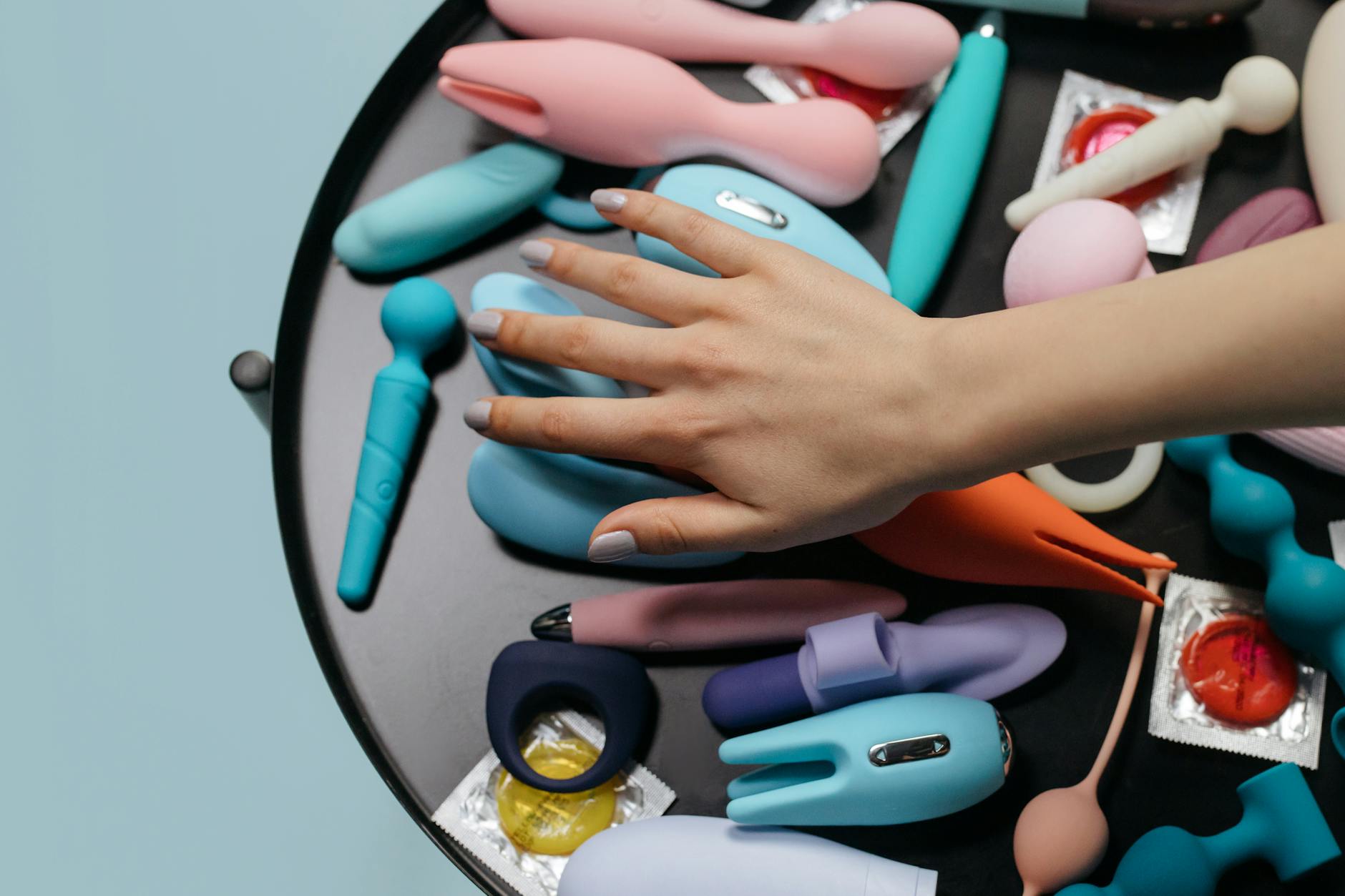
The conversation nobody's having
Let's be real. Around midlife, erectile changes show up in a lot of long-term relationships. It's not dramatic. It's not a sign the attraction is gone. It's just biology doing what biology does. The problem isn't the change itself. The problem is that most couples treat it like a personal failure instead of a logistics problem that a clitoral vibrator solves in about three minutes.
Here's what I see in my practice: one partner starts struggling with consistency. The other partner panics, then pulls back. Sex becomes less frequent. Tension builds. Then someone mentions toys, but it gets framed as compensation or backup plan, which makes everything worse. Nobody wants to feel replaced.
What actually works is flipping the frame entirely. A lemon clitoral vibrator isn't a workaround. It's an upgrade. And once you understand why, the whole dynamic changes.
Why erectile changes don't actually change pleasure
First, the physical part. Erectile function and clitoral pleasure are two completely separate systems. They live in different parts of the nervous system. They're triggered by different stimuli. They don't depend on each other. Yet most of us have been taught that they're linked. That's the root of the shame.
When someone with a penis struggles to maintain or achieve erection, the standard assumption is that penetrative sex is now off the table. But that's not true. What's actually off the table is the very narrow script most couples have been running. And that's not a problem. That's an opportunity.
A lemon sexual toy, specifically one that uses air-suction technology like the clitoral vibrators from Hello Nancy's Lems, stimulates the clitoris through a completely different mechanism than any partner can. It doesn't require penetration. It doesn't depend on your partner's erection. It doesn't even require your partner to stay hard the whole time. It just works, reliably, regardless of what's happening elsewhere.
The shame spiral and how to skip it
Here's the pattern I see most often. Your partner experiences erectile difficulty. They feel embarrassed. They start avoiding sex altogether because avoidance feels safer than failure. You interpret that as rejection. You stop initiating because rejection hurts. Resentment builds quietly. Then six months later you're having conversations that sound like "we just don't connect anymore," when what actually happened is a conversation never happened.
The introduction of a lemon vibrator stops this spiral cold. It does that because it shifts focus from what your partner's body is or isn't doing to what you're both building together. It's collaborative. It's solution-oriented. It removes the performance pressure that created the shame in the first place.
That reframe matters more than the toy itself.
How to introduce it without creating more tension
Timing and framing are everything. Don't bring this up mid-attempt or in the moment of difficulty. That feels like criticism. Instead, pick a neutral time. Maybe after a good conversation. Maybe in bed but not during sex. Start with curiosity, not diagnosis.
"I've been reading about clitoral vibrators and how they actually make shared pleasure easier for couples navigating changes. Thought maybe we could explore that together."
Notice what's missing: blame, pity, or the word "problem." Notice what's there: partnership and permission to try something new.
Then listen. A lot of partners worry about feeling inadequate if toys enter the picture. That's real. That's worth addressing directly. The conversation might sound like: "This isn't about replacing anything. It's about expanding what we get to experience together. Your pleasure matters just as much as mine."
Some partners will need time with that. Some will need reassurance more than once. That's fine. Patience here builds trust for everything else.
The mechanics that actually work
Once you've cleared the emotional air, here's how to use a lemon clitoral vibrator with a partner experiencing erectile changes.
Start separate, then integrate. Many couples use the vibrator during foreplay while your partner is still building arousal. No pressure on timing. No performance requirement. Just pleasure happening in the room.
Let it replace one piece of the puzzle. If penetration is inconsistent, the vibrator becomes the reliable source of clitoral stimulation. Penetration (when it happens) becomes additive, not the whole event. This changes the pressure landscape entirely. Your partner doesn't have to "perform" for you to have an orgasm. That's liberation for both of you.
Use patterns, not speed. Many people default to high intensity when they're nervous. Instead, start with lower intensity patterns on a device like the Lem, which offers multiple pulsing rhythms. Let your partner see that you're experiencing pleasure gradually, without urgency. That actually builds their confidence more than speed does.
Make it about sensation, not outcome. The goal isn't orgasm. The goal is feeling good for as long as you want to. That reframe takes pressure off everyone. Sometimes you'll finish. Sometimes you'll just enjoy twenty minutes of contact and closeness. Both are wins.
What changes in the relationship when you do this well
I've watched this shift dynamic in ways that go way beyond sex. When partners work through erectile changes together using clitoral vibrators, three things tend to happen.
First, sex becomes less transactional. You're not running the same five-minute script hoping for consistency. You're experimenting. You're communicating about what feels good. That communication leaks into other parts of the relationship.
Second, the partner experiencing erectile difficulty often reports that anxiety actually drops. Turns out that when your partner's pleasure is guaranteed, you stop white-knuckling. You relax. And relaxation is often exactly what erectile function needs.
Third, couples rediscover playfulness. Introducing a new tool into a relationship that's been running the same patterns for years gives you permission to be curious. That curiosity is what keeps long-term partnerships alive.
Common concerns, straightforward answers
Will this make the erectile difficulty worse? No. In fact, the opposite. When pressure is off and anxiety drops, erectile function often improves naturally. But here's the important part: whether it does or not, your sex life works anyway. That's the whole point.
What if my partner refuses? Then you have a different conversation. Not about the toy. About what he's afraid of and what he needs to feel safe. Sometimes that's professional support. A sex-positive therapist or a conversation with his doctor about what's actually happening physiologically can help.
Isn't this just a band-aid? Only if you treat it like one. A lemon clitoral vibrator is a tool that allows you to have an active, connected sex life while your partner's body does whatever it does. That's not a band-aid. That's pragmatism. And in long-term partnerships, pragmatism is what keeps couples intimate through every season.
When to get additional support
Sometimes erectile difficulty signals something that needs medical attention. Sometimes it's cardiovascular. Sometimes it's medication-related. Sometimes it's purely psychological. A conversation with a doctor who specializes in men's health isn't weakness. It's smart. Many cases are highly treatable once you know what's actually happening.
At the same time, a tool like a lemon clitoral vibrator works regardless of root cause. It's not either/or. It's both/and. Get the medical piece sorted if needed. And in the meantime, or alongside that process, build a sex life that doesn't depend on one specific body function.
The bigger picture
Ed changes don't end relationships. Shame does. Avoidance does. Resentment does. Those things happen when couples treat erectile changes like personal rejection instead of a logistics puzzle.
A lemon vibrator from Hello Nancy's Lems isn't romance. It's not a solution to emotional distance. But it is the most practical thing you can introduce to a partnership when performance anxiety is in the room. It takes the pressure off. It guarantees pleasure. It lets you both relax.
That's when the real connection happens.
People also ask
How often should we use a lemon clitoral vibrator if my partner has erectile difficulties?
There's no prescription. Some couples use it every time they're intimate. Some use it occasionally. The rhythm that works is the one that feels natural to both of you. That said, regular use builds confidence for the partner experiencing difficulty. If they can see that you're having consistent pleasure, that takes a lot of psychological weight off their shoulders. Start with what feels easy, then let the frequency find its own level.
Will using a lemon vibrator make my partner feel inadequate?
Possibly, yes, at first. That's why framing matters so much. If he interprets the toy as "you're not enough," that will sting. If he understands it as "we're building something that works for both of us," it feels collaborative. The conversation before you introduce the toy sets the emotional tone for everything after. Take time with that part. It's worth it.
Can we use a lemon clitoral vibrator during penetrative sex if my partner can't maintain erection?
Absolutely. In fact, that's one of the most common and effective approaches. While your partner is inside you, the vibrator adds stimulation to your clitoris without requiring your partner to do anything differently. It removes the burden of you needing to climax through penetration alone. Some partners find that taking that pressure off actually helps erectile function naturally. Whether it does or not, everyone gets to enjoy the experience.
What if my partner wants to use the vibrator on me but feels like it's emasculating?
Then reframe it as expanded intimacy rather than replacement. If he's the one creating the sensation, he's not competing with the toy. He's collaborating with it. Some partners actually feel more connected when they're actively involved in your pleasure, even with a tool. Try that angle: "I'd love if you used this on me. That way we're doing this together."
Is there a best time in the cycle to use a lemon vibrator if my partner has ED?
Not really. Clitoral pleasure doesn't require the same hormonal timing that penetration might. That said, pay attention to when you naturally have more desire. If you notice patterns, lean into those. And remember that introducing a vibrator can actually build desire by removing performance anxiety. You might find you want sex more often once the pressure is off.
Should we talk to a doctor before introducing a clitoral vibrator if my partner has erectile difficulties?
There's no medical reason not to. But the toy itself isn't a treatment for ED. It's a tool that lets you have satisfying sex while you're figuring out what's causing the difficulty. Get the medical evaluation if you haven't. And use the vibrator now. Both things are true at once.