
Let's name what's actually happening here
Your partner isn't rejecting you. They're protecting something. Maybe it's their sense of being "enough." Maybe it's old baggage about what toys mean. Maybe they genuinely think you're dissatisfied and the toy is proof. None of those things are true, but they feel true to them, and that's where the friction lives.
Here's what I know after years of working with couples: the vibrator isn't the real conversation. It's the stand-in for a much bigger one. The good news is that naming that difference changes everything.
Why partners resist, and it's rarely what you think
There are five core fears I hear, and they usually aren't spoken aloud:
"I won't be needed anymore." This one shows up quietly. Your partner worries that if you can pleasure yourself easily, they become redundant. It's not logical (you didn't stop eating their cooking when you learned to cook), but it's real.
"This means something is wrong with our sex." They interpret the introduction as criticism. You're saying their touch isn't enough, their rhythm is off, they're not satisfying you. That's a blow to identity.
"I don't understand it, so it scares me." Unfamiliar things feel risky. If they don't know how a lemon clitoral vibrator works or what it's supposed to do, the unknown breeds anxiety.
"This is too far into ‘weird territory’ for us." Your partner might have a story about what "normal" couples do, and toys don't fit. Suggesting them feels like a departure from the relationship they thought you had.
"It'll change you." Some partners worry that pleasure outside their touch will create distance. That you'll want things they can't provide, or that the experience will somehow reset your attachment.
None of these thoughts are reasonable. All of them are understandable. And you can't logic someone out of a place they didn't logic into.
The conversation that needs to happen first
Before a lemon vibrator ever enters the bedroom, it needs to enter the conversation. And here's the key: it's not about the toy.
Start with desire, not devices. Say something like: "I've been thinking about what turns me on, and I want to explore more of that. I'd love your help thinking through how we could make that happen together."
Notice what's different: you're not saying the vibrator is the solution. You're saying pleasure matters and you want to figure it out as a team. That reframes the whole thing from "I need this thing" to "I want us to be more creative."
Then listen. Ask them what they're worried about. Don't defend; just listen. "That sounds scary" is a complete response. You don't have to fix their fear immediately. Sometimes just acknowledging it takes the charge out of it.
When they tell you what they're protecting (usually one of those five fears above), you can address it directly. "I'm not saying you're not enough. I'm saying pleasure comes in layers, and I want to explore them with you."
How to introduce the actual tool
If the conversation went reasonably well, the toy introduction can be almost anticlimactic. Here's how:
1. Let them hold it first. Not in bed. Show them the Lem vibrator when you're both clothed, maybe after dinner. "I got this. Want to see how it works?" A lemon clitoral vibrator is a beautiful object. It's not intimidating when you're not in a vulnerable moment. Let them feel the material, test the patterns on their arm, ask questions. Familiarity kills fear.
2. Explain it like you would a kitchen gadget. "It's a suction-based vibrator. No direct pressure. It works really well for me because it doesn't numb the way traditional vibration can." Functional information. Not sexy language, not shame, not mystique. Just facts.
3. Make it optional immediately. "I want to try this solo a few times first to get the hang of it. No pressure to ever use it together." This removes the threat. They don't have to participate. They don't have to watch. It's just a tool you're adding to your own routine.
How to actually use it together, if they soften
If they do come around and want to try it together, the setup matters.
First time: you direct it. If they're present but tentative, you take full control. You're in charge of the sensation, the rhythm, the experience. They're supporting, not performing. "Would you like to be inside me while I use this?" If yes, great. They get to feel how you respond. If no, that's fine too.
Take time with it. A lemon adult toy session isn't a sprint. You're showing them that pleasure can be slow, exploratory, and collaborative without it being about "doing" anything. You're just present together.
Talk after. "That felt really good" is information. It's not criticism of how things usually feel; it's just data. You might say: "I liked that you were here for it." You're not saying "this is better than you." You're saying "your presence matters to me in multiple ways."
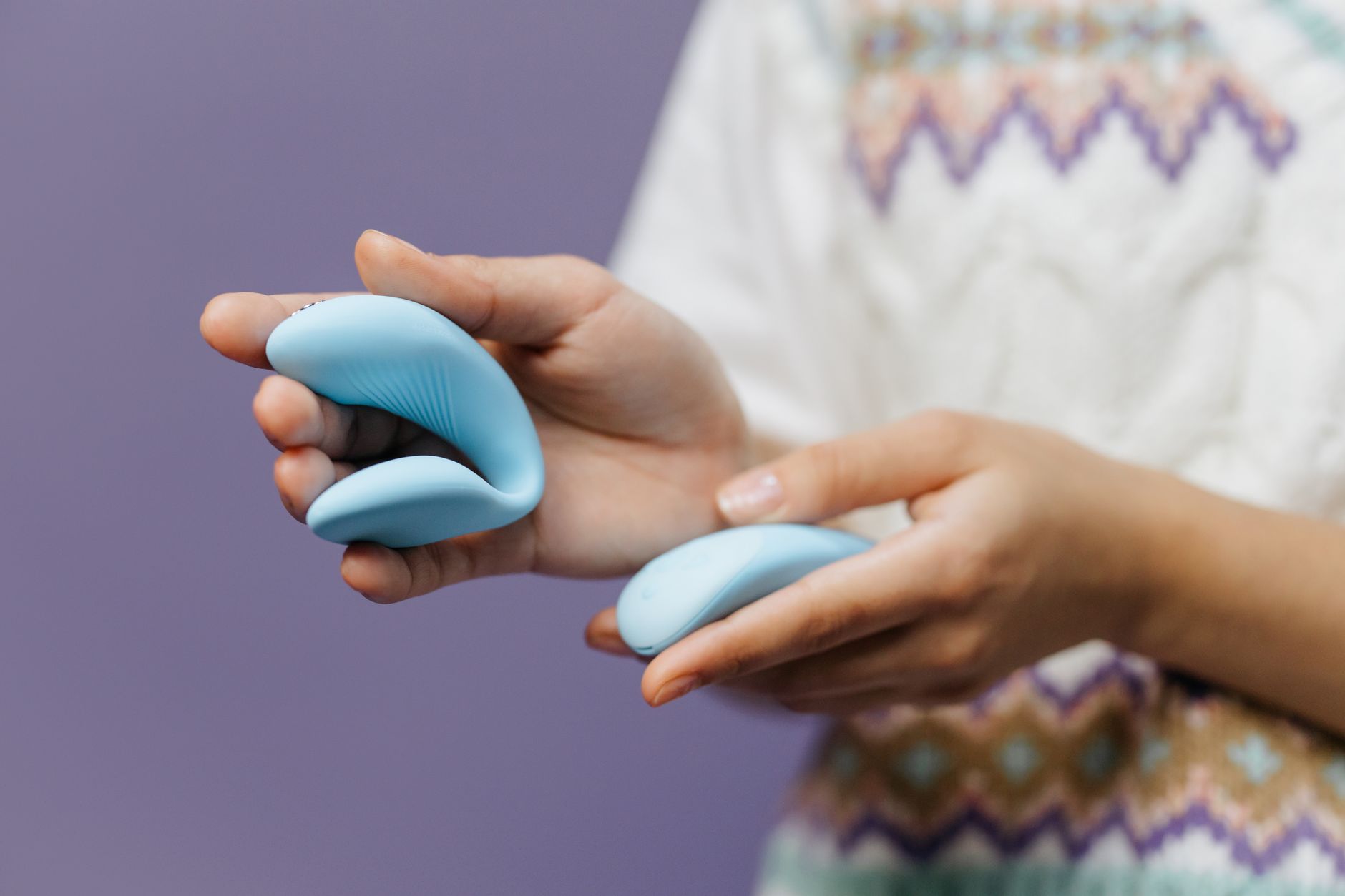
Photo by cottonbro studio on Pexels
The harder path: when they still won't budge
Sometimes the conversation doesn't shift things. They remain firmly opposed. Here's where you have to get clear about what matters more: using a lemon vibrator, or keeping the peace.
I'm serious. This is a real choice point, and it's different for every relationship.
If pleasure and self-exploration matter to you (and they should), then you have permission to use toys on your own, regardless of your partner's comfort level. Your body is yours. Your orgasms are yours. Period.
But if you use something they've explicitly forbidden, you're also choosing a secret. And secrets compound. They feel like small rebellions until they feel like walls.
So the honest version: "I hear that you're not comfortable with this. I also know that exploring my own pleasure matters to me. So here's what I'm going to do: I'm going to use this on my own time, and I won't push you to participate. But I need you to know this is happening."
It's not a compromise (they still don't like it), but it's a boundary. And sometimes boundaries are what actually create the space for intimacy, because there's no deception.
Most couples I work with find that once the secrecy is gone and the tool is normalized, resistance softens. Not always. But often.
What actually shifts the dynamic
The couples who move through this well have one thing in common: they separate the vibrator from the relationship. The tool is not a judgment on their partner. It's not a replacement. It's an addition.
When you use a lemon clitoral vibrator, you're not saying "I need something you can't provide." You're saying "I want to know my own body better, and that knowledge makes me a better partner to you."
That's the shift. That's what lands with people who are scared.
Your pleasure is not a threat to your partner. It's an invitation. And if they can't see it that way eventually, that's information too.
People also ask
Should I hide my lemon vibrator from my partner?
No. Hiding it creates a story in their head that's usually much worse than the truth. "They're keeping secrets" feels like betrayal, even if the vibrator itself shouldn't. Being transparent removes the shame from the equation. "I got a toy I want to explore" is a lot less loaded than a secret purchase that gets discovered.
What if my partner thinks the Lem is a replacement for them?
It's not, and you can say that directly: "This isn't about replacing you. It's about me getting to know my own body in a new way. And honestly, the more I understand what feels good to me, the better I can tell you what I want from us." Frame it as deepening your connection, not sidestepping it.
Can a lemon vibrator actually help a dead bedroom?
Sometimes, but not in the way you might hope. If your bedroom is dead because of resentment, communication breakdown, or fundamental incompatibility, a vibrator won't fix that. What it can do is give you solo pleasure while you work on the actual relationship issues. And sometimes, seeing your partner reconnect with pleasure creates space for curiosity. But the vibrator is a tool, not a therapist.
How do I talk to my partner about my clitoral vibrator without sounding like I'm criticizing them?
Lead with curiosity, not complaint. "I've been researching what helps people like me feel more sensation" sounds very different from "You're not getting me there." One is about exploration; the other is about failure. Choose your framing carefully.
What if they agree to try it but seem uncomfortable?
Check in. "Are you okay? We can stop." Full stop. Don't push. Discomfort doesn't transform into acceptance through persistence. If they seem interested but awkward, keep it light. "This is weird, right? It's okay if it's weird." Naming the weirdness often dissolves it.
Is there a right time to bring this up?
Not during sex. Not during an argument. Not after they've had a few drinks. Bring it up when you're both calm, clothed, and in neutral territory. A walk, a coffee, an evening when neither of you is tired or stressed. The setting signals that this is a real conversation, not a spur-of-the-moment thing.
The real issue is always connection
When a partner resists a lemon clitoral vibrator, they're usually not resisting the tool. They're resisting a story they're telling themselves about what the tool means. Your job isn't to convince them the tool is fine. Your job is to help them see that you wanting pleasure, you wanting to explore, you wanting to feel good.all of that makes you a more present, more happy, more satisfied partner.
The vibrator is just the medium. The message is: "I care about my own pleasure, I care about ours, and I want you to care about both."
If your partner can receive that message, the Lem becomes just another detail. If they can't, well. That's a different conversation, and it might be worth having with someone trained to help you both navigate it.
Your pleasure matters. Full stop. How your partner responds to that truth tells you something important about your relationship.