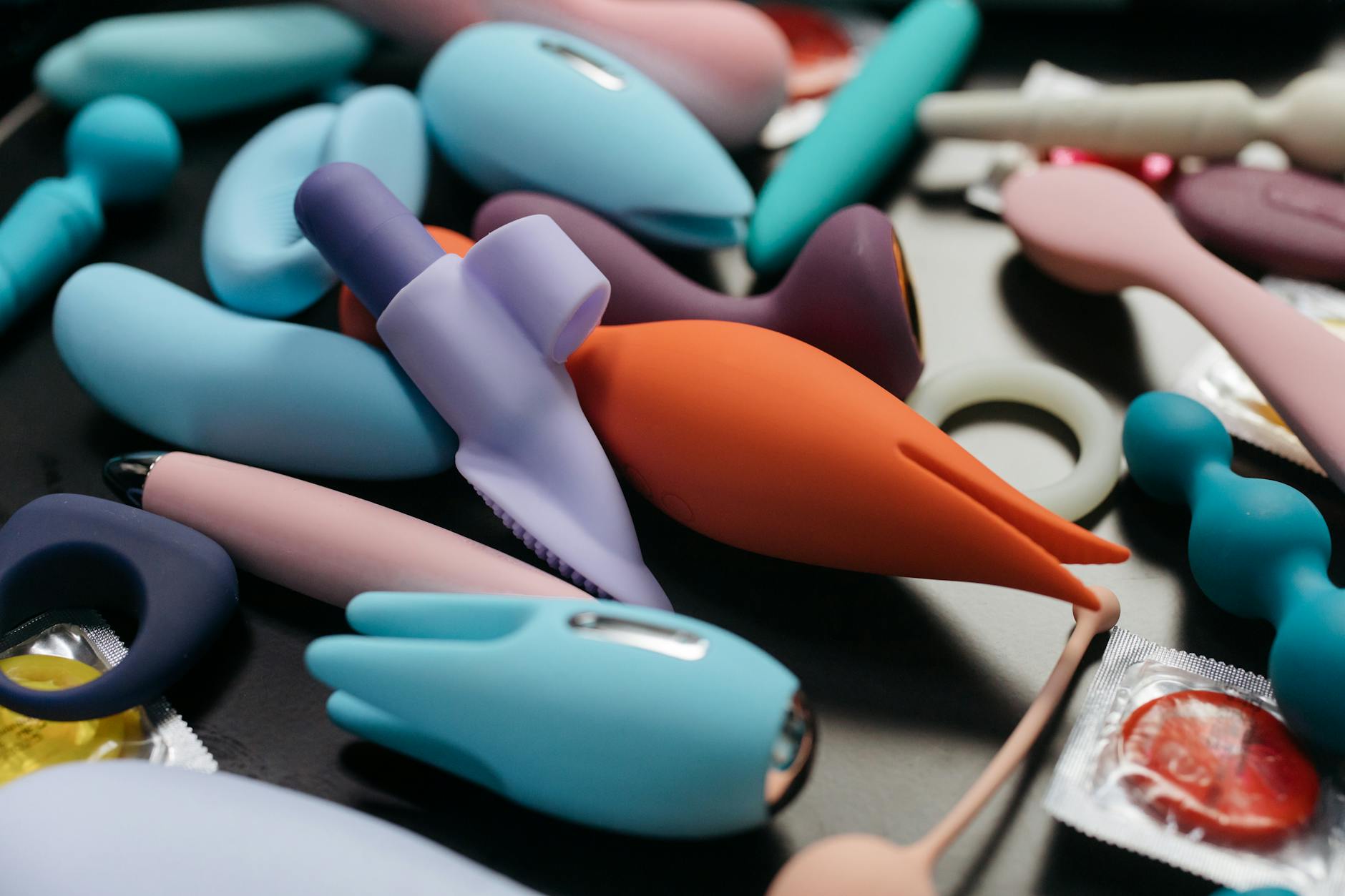
The fear is real, and it's not about the toy
Let's be honest: introducing a vibrator into your partnership feels like you're asking for something your partner can't give you. That's the story most of us tell ourselves. The actual risk is much smaller. The emotional risk you're imagining is enormous.
What's really happening is you're worried that suggesting a clitoral vibrator means you're saying "I'm not happy," or worse, "You're not enough." So you stay quiet. You browse. You add things to cart and close the browser tab. Months pass. And the resentment of not having what you want starts to feel like a wall between you.
This is fixable. It just requires naming what you're actually scared of, and then doing the conversation differently.
What your partner is probably afraid of (and it's probably not what you think)
Most partners who react defensively to toy suggestions aren't threatened by the toy itself. They're reacting to what they assume it means about them.
Here's what he or she might be hearing underneath: "I need this because sex with you isn't working." Or: "I'd rather have this than you." Or: "You don't satisfy me."
None of that is what you're saying. But if you lead with "I want to use a vibrator," without context, that's the gap your partner's insecurity rushes to fill.
The fix is to lead with desire, not deficit. You're not introducing a tool because something is broken. You're introducing it because you want to feel more. You want to explore together. You want to bring something new into the space you already share.
The conversation architecture that works
Timing first: not during sex, not right after, not when either of you is tired or stressed. Pick a normal evening, maybe after dinner, when you have privacy and both of you are present. This isn't a rushed conversation.
Opening line matters. Try one of these:
"I've been thinking about our sex life, and I really like it. I also want to try something new together, and I'm nervous about bringing it up because I don't want you to misunderstand what I mean."
Or: "I read something about clitoral vibrators, and I'm curious. I'd love to explore that with you, but I wanted to ask first rather than surprise you."
Or: "I want to feel more sensation, and I think a vibrator might help. I'm not saying anything is wrong. I'm saying I want more of what's right."
Notice what these have in common: they lead with "I want," not "you can't." They invite partnership. They acknowledge the vulnerability.
Your partner will likely ask questions. Some will feel like they're doubting you. That's just fear talking. Answer directly. No over-explaining, no defending.
If he says "Do you not enjoy what we do?" Answer: "I do. I also want to try this. They're not the same thing." If she says "Is this because of something I'm doing wrong?" Answer: "No. It's because I want to experience more sensation." That's it. No apology for wanting pleasure.
The introduction that reduces defensiveness
If your partner says yes but you can sense hesitation, reduce the stakes. Frame it as an experiment, not a new normal. "Let's try it once and see how it feels" lands better than "I want to do this all the time."
When you do introduce the actual vibrator, keep it light. A lemon clitoral vibrator, for example, is visually soft and non-threatening in a way that some toys aren't. The color, the shape, the texture. It doesn't scream "you're being replaced." It whispers "this could be fun."
Let him or her hold it first. Let them feel how light it is, how quiet. Familiarity kills defensiveness. If they understand it's a tool for your pleasure, not a judgment on theirs, the energy shifts.
How to use it together (when things move forward)
Start with foreplay, not penetration. This isn't the time to prove anything. You're exploring sensation, nothing more.
Keep communication open the whole time. "This feels good," or "That's nice," or even "Let me try a different setting." Narrating your pleasure isn't selfish. It's permission for your partner to be part of the experience instead of on the outside of it.
If you're using a lemon sucker or similar clitoral vibrator, start at lower intensity settings. Build up. Your partner might enjoy holding it, controlling the rhythm. That gives them agency and makes it collaborative.
If your partner wants to try sensation on themselves, let that happen without commentary. Some partners are curious once the initial fear lifts. Some aren't. Both are fine.
The goal here isn't to prove the toy works. It's to prove that introducing new things doesn't destabilize your partnership. It deepens it.
The second conversation (and why it matters)
After you've used the vibrator once or twice, check in outside the bedroom. This matters.
"That felt really good. I appreciated how you were part of that." Or: "I loved trying something new together. What was it like for you?"
Give your partner space to say "I liked it," or "It felt weird," or "I need to think about it." All of those are data. All of them move the conversation forward.
This is where a lot of people mess up. They assume silence means acceptance. But unprocessed hesitation becomes resentment later. Get it out.
If your partner enjoyed it, great. Now you have language for future conversations. "Remember how good that felt?" is a way to normalize toys as part of your shared experience. If your partner needs more time, that's okay too. You've planted the seed. Pressure kills curiosity.
When your partner stays resistant
Some partners won't get there, no matter what you do. Sometimes it's about control. Sometimes it's insecurity they can't shake. Sometimes it's a values thing, and they genuinely believe toys are wrong.
If after a honest conversation your partner is still closed, you have a choice: accept that this part of your sexuality happens solo, or recognize this as a sign of a bigger pattern where your needs don't matter.
I know that sounds harsh. It's not meant to be. It's meant to be honest. Using a lemon vibrator isn't an act of betrayal. It's an act of self-care. If your partner can't support you having pleasure, that's information about the relationship, not information about you.
Most couples land somewhere in the middle. The conversation happens, hesitation softens over time, curiosity takes over. You find a rhythm that works. And then, oddly enough, the vibrator becomes less of a big deal and just becomes something you use when you want to.
That's the goal. Not conversion. Just integration.
FAQ: The questions people actually ask
Will introducing a vibrator make my partner think I'm not satisfied?
Only if you frame it that way. Lead with curiosity, not complaint. "I want to feel more" is different from "I'm not feeling enough." The first is about expansion. The second is about deficit. Say the first one.
What if my partner thinks vibrators are cheating?
That's a values conversation, and it's bigger than the toy. Ask directly: "Help me understand what you think a vibrator means." Listen. You might find out it's not about the toy at all. It's about feeling replaced, or a belief they absorbed from somewhere. Address the actual fear, not the tool.
Is it weird to use a vibrator together if we've never talked about it before?
Yes, it's weird. That's why you have the conversation first. Surprise toys feel like violations. Invited toys feel like collaboration. Do the hard thing upfront.
What if I'm the partner who's nervous about the vibrator my partner wants to use?
Your feelings are valid. But don't shut down the conversation. Say, "I feel nervous. Help me understand what this means to you." Listen without defending. Your partner's pleasure doesn't diminish yours. That's the thing that's hard to believe until you try it.
How do I know if my partner actually enjoyed it or was just being nice?
Ask. Not in a needy way, just directly. "I want to know what that felt like for you, the real version." Most people will tell you if you make it safe to do so. Some won't. But you'll know where you stand, which is better than guessing.
Can we use a clitoral vibrator if we haven't had sex in a while?
Absolutely. In fact, it can be a gentler way back in. Lower pressure, more exploration, less performance. Just have the conversation first. If you're returning to sex after a break, introducing something new requires buy-in, not surprise.
The real thing you're building
Honestly, the vibrator is the easy part. What's actually hard is building a partnership where both people's pleasure matters equally, and where asking for what you want isn't treated as a threat.
That takes conversation. It takes vulnerability. It takes the willingness to be wrong about what your partner thinks, and to be surprised by what they actually want once you ask.
If you can do that conversation well, the vibrator becomes just a tool. A nice one. A tool that says you're both willing to keep exploring, together.