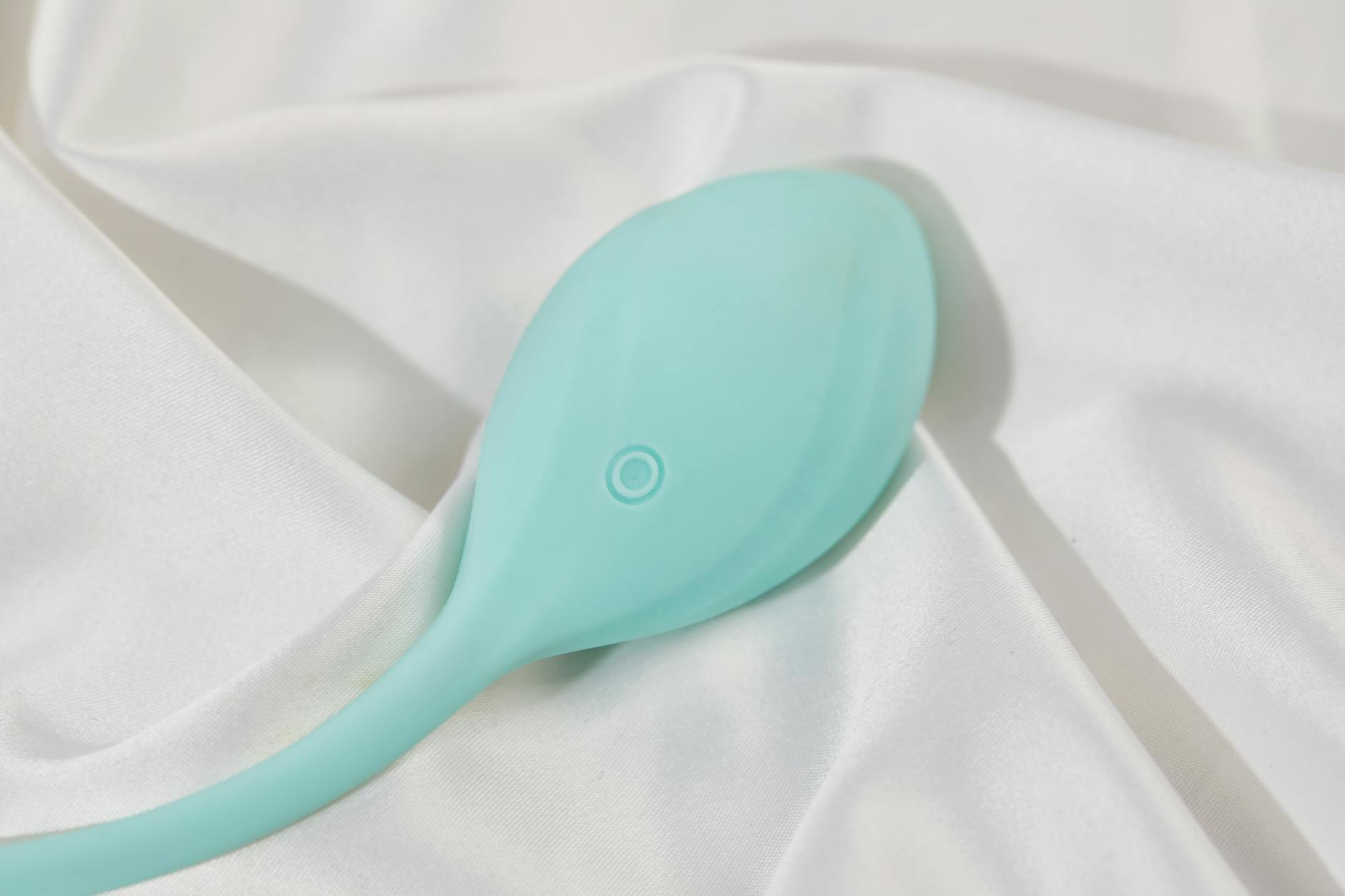
Let's talk about what nobody mentions
You're aroused. Really aroused. And then nothing comes. Or it comes, and then stops halfway through. Or it shows up three minutes later when you've already lost your groove. This is not a personal failure. It is not a sign that you're less attracted, less interested, or less capable of pleasure. It is a body fact that almost nobody explains clearly.
Natural lubrication is not a reliable on-off switch. It's a dimmer that responds to stress, cycle timing, medication, hydration, sleep, and a dozen other variables that have nothing to do with desire. And when you're using a lemon vibrator or any clitoral toy, unpredictable lubrication changes everything about how the experience feels.
Why lubrication shifts (and it's not what you think)
Your body produces lubrication through two separate systems. The first is the actual vaginal secretion that comes from the vaginal walls. The second is the pre-orgasmic fluid that emerges from the Bartholin's glands, usually when you're more deeply aroused. These two don't always arrive on the same timeline.
The vaginal walls respond to estrogen levels, which fluctuate across your cycle, shift with hormonal birth control, drop during perimenopause and menopause, and decrease with age. Stress hormones like cortisol actively suppress lubrication production. Sleep deprivation does the same. So does dehydration. So does certain medications, including antidepressants (ironically), blood pressure meds, and allergy medications.
But here's the thing that matters most: none of this has anything to do with how much you want sex. You can be wildly turned on mentally and still experience reduced lubrication. The brain and the body aren't always working in sync, and that's completely normal.
How unpredictable lubrication changes the lemon vibrator experience
The Lem works through suction and pulsation, which is different from friction-based vibrators. But it still benefits from some moisture. Without it, the seal between the toy and your body gets harder to maintain, and the sensation can feel either too intense or too flat.
Many people find that when natural lubrication is light, the lower intensity settings on the lemon vibrator feel scratchy or uncomfortable. You might want to jump straight to level 3 or 4, which is fine, but it also means you're missing out on the slow build that makes the experience more intense later.
The other thing that shifts is timing. If lubrication shows up slowly, you need longer warm-up time before the toy itself feels good. This is where a lot of people get frustrated and either abandon the toy or force things before their body is ready.
The water-based lubricant strategy that changes everything
Here's what I tell every client: water-based lubricant is not a consolation prize. It's a tool that lets you control the experience instead of waiting for your body to cooperate on its own timeline.
Apply a small amount of water-based lube to the outer edge of the Lem before you start. Not inside the cup, but around the rim where it meets your body. This creates an easier seal without feeling like you're fighting physics. You'll get better suction, steadier sensation, and more flexibility in how you use the intensity settings.
The second thing it does is buy you time. If your natural lubrication is slow, the external lube takes pressure off the situation. You're not waiting and wondering. You're not second-guessing whether you're aroused enough. You can focus on the sensation instead of the logistics.
Chose a lube that's labeled for toys. Silicone-based lubes feel richer and last longer, but they can degrade silicone toys over time. Water-based is safer for the Lem and easier to clean up. Reapply as needed. There's no rule about how much you're allowed to use.
When to adjust your routine
If you're noticing unpredictable lubrication, start tracking the pattern. Are certain days of your cycle drier? Are stressful work weeks affecting things? Is it worse when you're dehydrated? This information tells you when you might want to give yourself extra warm-up time or plan to use lube proactively.
Water intake matters more than you'd think. People who are chronically under-hydrated often experience reduced lubrication, and it's an easy fix. Drinking more water doesn't instantly solve the problem, but over a week or two it usually improves things noticeably.
Sleep also matters. When you're running on five hours a night, your body deprioritizes lubrication production because it's in survival mode. If you've been sleeping poorly and noticing dryness, that's worth fixing before you assume anything else is wrong.
Medication timing can also shift things. If you take an antihistamine or blood pressure medication, try paying attention to whether you're drier on days you take it versus days you don't. If there's a pattern, talk to your doctor about timing or alternatives.
The mental piece (which is half the battle)
Let's be real: waiting for your body to produce lubrication when you're ready to have pleasure is genuinely frustrating. It can feel like your body is working against you. The temptation is to either force it or give up entirely.
Neither is necessary. Using lube externally is not cheating. It's not a sign that something is wrong with you. It's using the tools available to make an experience work better. The same way you'd use a pillow to adjust comfort, you're using lube to adjust the physical setup.
Many people find that removing the stress around lubrication actually improves natural lubrication over time. When you stop waiting and worrying, your nervous system relaxes. When your nervous system relaxes, arousal deepens. When arousal deepens, lubrication often follows. It's a weird feedback loop, but it's real.
The Lem on low settings without much lubrication
If you're in a situation where you want to use the lemon vibrator but lubrication is sparse and you don't have lube available, lower intensity settings are your friend. Start at pattern 1 or 2. The suction is gentler, and the sensation is less dependent on moisture.
You might need longer warm-up time. Spend 5 to 10 minutes on the lower settings before considering moving up. Let your body respond at its own pace. This is not wasted time. This is foreplay with a toy that's built for extended exploration.
If after 10 to 15 minutes on low settings things aren't moving in a direction that feels good, stop. Your body might just be in a state where this timing doesn't work. That's fine. You can try again later or on a different day. Not every session is going to be magic, and that's normal.
When dryness signals something to take seriously
Most unpredictable lubrication is just logistical. But if you're experiencing persistent, severe dryness that's accompanied by pain, itching, or burning, that can indicate genitourinary syndrome of menopause (GSM) or another medical condition. That's worth mentioning to your doctor.
Similarly, if lubrication completely disappeared suddenly after years of being normal, and nothing in your life changed, that can sometimes signal a hormonal shift or a medical issue worth investigating.
But the day-to-day stuff? The unpredictability where sometimes you're wet and sometimes you're not? That's just how bodies work. You're not broken. You just need a strategy.
FAQ
Can I use silicone-based lubricant with my Lem?
Silicone-based lubes feel wonderful and last longer than water-based options. However, silicone lube can gradually degrade silicone toys, including the Lem. Water-based lube is the safer choice for your lemon vibrator. If you prefer silicone lube, check with Hello Nancy's care guide for compatibility details.
Does using lube mean there's something wrong with my lubrication?
No. Lube is a tool, not a diagnosis. Plenty of people with perfectly healthy lubrication use lube because it improves the sensation or allows more flexibility in when they can use their toys. It's not a workaround for a problem. It's just an option.
Will using lubricant with my clitoral vibrator change the sensation?
Slight changes, yes. External water-based lube makes the seal smoother, which can make lower intensity settings feel more comfortable. Some people find that lube makes the sensation subtly less intense, which can actually be nice if you're sensitive. You might need to explore a few applications to find what feels best.
How often should I reapply lubricant during a session?
As often as feels good. If the sensation changes or feels less smooth, reapply a small amount. There's no rule. If you like the way it feels, keep it going. If you notice it drying out partway through, a bit more lube takes care of it.
Is there a type of lubricant that feels closest to natural lubrication?
Water-based lubes with hyaluronic acid or aloe are often described as feeling more natural than synthetic options. Some people prefer glycerin-free formulas. The only way to know is to try a couple and see which texture you prefer. What feels right is personal.
If I need lube every single time, should I be concerned?
Not necessarily. Some people just have lighter natural lubrication. Some prefer lube because it gives them more control over the experience. Others use it most of the time but not always. None of these patterns is a red flag. If you're also experiencing pain, itching, or burning, mention it to your doctor. If it's just the quantity or consistency, it's usually just biology.