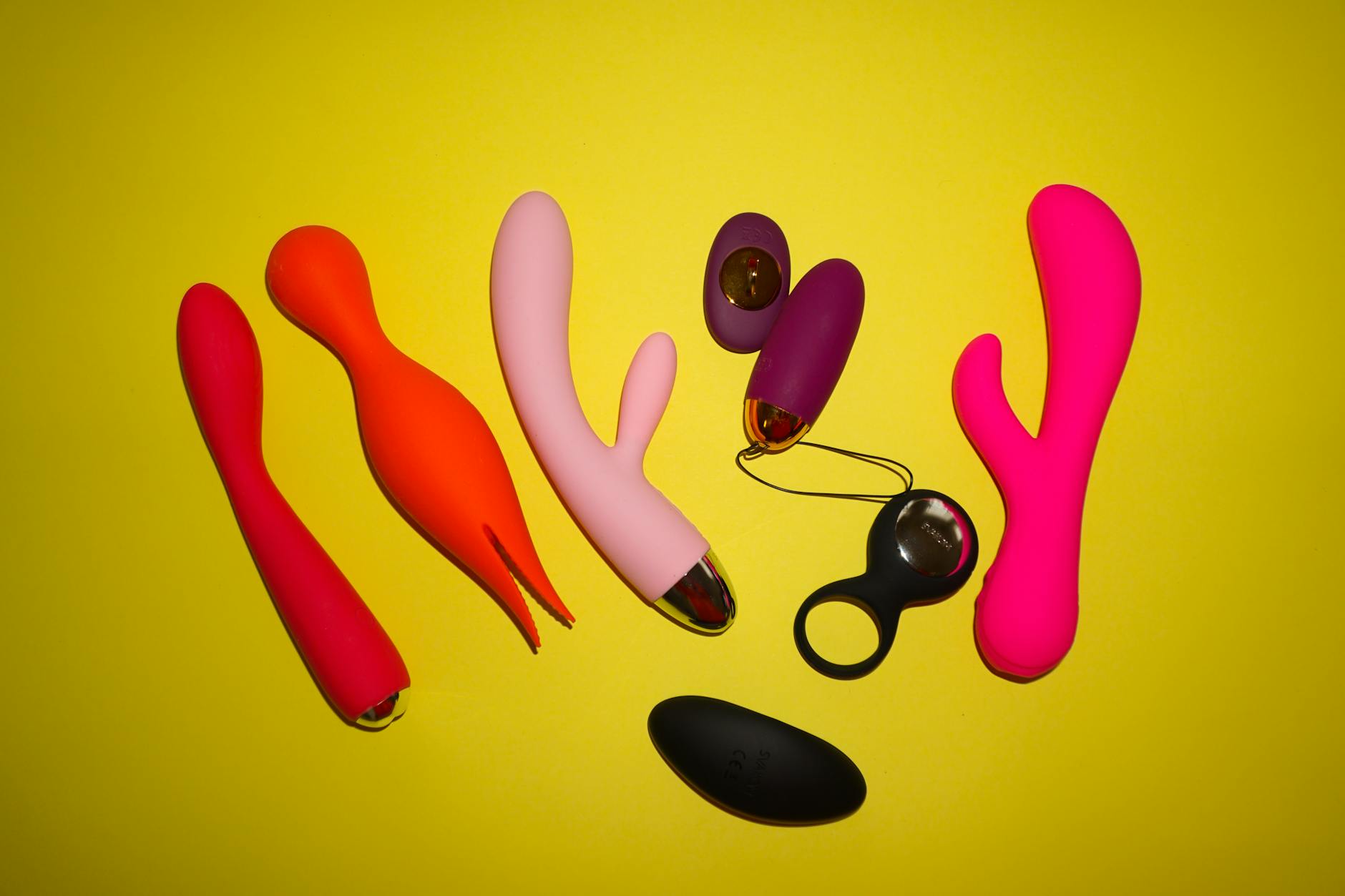
How to Use a Lemon Vibrator When Hormones Affect Your Arousal Timing
Here's the thing nobody tells you about hormonal shifts: they don't kill arousal. They just slow down the on-ramp.
Maybe you're noticing it takes 20 minutes instead of 5 to feel genuinely turned on. Maybe you're on a medication that flattens that quick spark you used to feel. Maybe you're navigating perimenopause or recovery from birth control, and your body's just... different now. The frustration isn't that arousal is impossible. It's that the timeline has changed, and nobody prepared you for that.
The good news? A lemon clitoral vibrator is specifically designed for exactly this scenario. Not because it magically speeds things up, but because it works with the body you have right now instead of demanding you stay in the body you used to have.
What hormones actually do to arousal speed
Let's be clear about the physiology here. Estrogen, progesterone, and testosterone all influence blood flow to the vulva and the sensitivity of nerve endings in the clitoris. When those hormones fluctuate, dip, or shift, the neural signal that usually says "you're turned on" gets quieter. Not silent. Quieter.
People often describe it like this: it used to be a light switch. Now it's a dimmer switch with a longer fade-in. The arousal is still there. The pathway still works. The signal just takes longer to build enough intensity to register as "yes, I want this."
This happens with:
- Hormonal birth control (especially the pill or hormonal IUDs)
- Post-partum recovery
- Perimenopause or menopause
- Certain antidepressants
- Significant stress (which tanks cortisol and throws off the whole cascade)
- Recovery from sexual trauma (different mechanism, same experience)
What's wild is that people often assume the arousal isn't there at all. They get discouraged, stop trying, and then the actual issue compounds because you've stopped the very activity that would wake the system back up.
Why the timeline matters more than you think
Here's where most people mess up: they use a clitoral vibrator the same way they did when arousal was faster. They go straight to intensity instead of letting the vibration work as a warm-up tool.
That doesn't work when arousal is on a slower timeline. What works is using a lemon vibrator as a bridge between "not quite ready yet" and "actually turned on." The suction-and-vibration action of a lemon vibrator is perfect for this because it's engaging enough to accelerate the process without feeling jarring or too intense.
Instead of fighting the slower timeline, you're working with it. You're using external stimulation to help your body catch up to your mind's interest in pleasure.
Setting up the space (before you touch yourself)
When arousal takes longer, environment matters more. I'm not talking about candles and music (though hey, if that's your thing). I mean: do you have 30 minutes or not? Can you actually relax, or is half your brain still thinking about the email you didn't send?
One small shift that changes everything: schedule it. Put it in your calendar. Tell your partner "I'm taking 30 minutes for myself around 8 p.m. on Tuesday." Knowing you have protected time rewires how your brain approaches the experience. You're not rushing. You're not stealing five minutes between tasks. You're giving your nervous system permission to actually settle.
Once you're in that space:
- No phone (seriously, your nervous system can't relax if you're half-attending to notifications)
- Whatever temperature you like, maybe slightly warm
- If you use lubricant, have it close by (we'll talk about this)
- Dim lighting or eyes closed if bright light is distracting
How to actually use a lemon vibrator when buildup is slow
Start at a low intensity pattern. On the Hello Nancy Lems lemon vibrator, that's patterns 1-3. The goal here isn't orgasm. The goal is signal amplification.
Begin outside the most sensitive areas. Trace the outer lips, the lower abdomen, the inner thighs. This is your 5-10 minute warm-up phase. You're not rushing to the clitoris. You're letting your body wake up gradually while the vibration does the heavy lifting of increasing blood flow and nerve activation.
After 5-10 minutes of that, move to the clitoral area but stay on those lower intensity settings. Use a small circular motion or let the vibrator hover just off the skin if direct contact feels too much right now. The lemon vibrator's air-suction design is actually perfect here because you can use it at a distance. You're not locked into aggressive friction.
Then gradually move up through patterns 4-5 as sensation builds. The key word is gradually. This isn't a race to the highest setting. You're matching the intensity to how your body is actually responding, not fighting against your arousal timeline.
For people using a lemon clitoral vibrator through this, the whole process typically takes 15-25 minutes. That might feel long compared to what you're used to, but it's actually way faster than the old approach of "lie there frustrated for 20 minutes waiting to feel something."
Lubricant: your hidden advantage
When arousal is slow, natural lubrication can be slower too. This isn't a sign of a problem. This is just what happens when everything's running on a slightly delayed timeline.
Use water-based lubricant even if you don't feel like you need it yet. The lubricant does two things: it reduces any friction that might feel uncomfortable, and it signals to your body "okay, this is happening now." That psychological signal actually matters. Your nervous system relaxes a little knowing you're set up for comfort.
Apply it to the external clitoris and labia, and reapply as needed. There's no "right" amount. Just enough that everything feels smooth.
Working with a partner through slow arousal
If you're using a lemon vibrator with a partner present, communicate the timeline upfront. Say something like "my arousal is running a little slower these days, and I want to spend 20 minutes just focusing on sensation before we do anything else."
Then actually take 20 minutes. Don't rush it because your partner is getting impatient. The worst thing you can do when arousal is already slower is add performance pressure on top. That kills what little signal you had.
Some partners love being part of the buildup. They might hold the lemon vibrator for you, or they might just be present and quiet while you explore. Some partners step out of the room entirely and come back when you're ready. All of those are fine. What matters is that you're not fighting against both your body's timeline and external pressure.
When it still feels stuck
Sometimes you do everything right and arousal just... doesn't show up. That happens too, and it usually means one of three things.
First: you might need more time than you thought. Some people on certain medications or going through certain life phases genuinely need 30-40 minutes. That's not broken. That's just the timeline. If 30 minutes into it you're still not feeling it, stop. You don't need to force the outcome.
Second: the environment isn't actually relaxing you. You think you've carved out time, but your nervous system is still half-alert. Try a different space or time of day. Some people find that morning arousal is slower but easier to access. Others find that evening, after they've already moved their body, is better.
Third: something underneath the hormonal shift is happening. Relationship stress, lingering trauma, depression, or just a phase of life where pleasure isn't calling to you right now. That's worth sitting with honestly, maybe with a therapist. A lemon vibrator is a tool, not a cure for deeper disconnection.
The long game: rebuilding your arousal baseline
Here's what I've seen with people who stick with this approach: after a few weeks of working with the slower timeline instead of against it, the baseline sometimes starts to shift. Not back to the old speed necessarily, but faster than where it was.
This is because arousal is partly neurological and partly habitual. When you create a consistent, low-pressure experience of arousal building slowly, your nervous system starts to recognize the pattern. The next time you use a lemon vibrator, the warm-up phase might compress a little. Not because anything magical happened, but because your body learned "okay, this is safe, I can engage."
That's not something you can force. But it's something that happens naturally when you stop fighting against your timeline and start working with it.
People also ask
How long should I wait after starting before using higher intensity patterns on my lemon vibrator?
Wait until you feel actual arousal building, not just mechanical sensation. That's usually 10-15 minutes in if everything is going well. The sign is usually a shift in how the vibration feels. It goes from "interesting" to "actually good." That's when you can bump intensity. If you're still in the "interesting" phase at 15 minutes, give it another few minutes. Forcing intensity too early just resets your arousal clock.
Does using a lemon vibrator regularly actually speed up my arousal over time?
Regular use can help, but not because the vibrator magically fixes your hormones. What happens is your body gets familiar with the pattern and your nervous system relaxes into it. Familiarity itself speeds things up a little. The real benefit, though, is that you're having consistent, pleasurable experiences instead of frustrating ones. That consistency is what sometimes nudges the timeline shorter.
Should I use the lemon vibrator solo first before using it with a partner if my arousal is slow?
Yes, usually. When you're learning your new arousal timeline, having your partner present adds a layer of potential performance pressure, even if they're being supportive. Solo exploration lets you figure out what your body actually needs without any external expectations. Once you know your own timeline, then bringing a partner in is easier because you know what works.
Can certain times of my cycle make arousal even slower?
Absolutely. If you're still menstruating, arousal can shift across your cycle. Some people find the luteal phase (the week or so before their period) is particularly slow. If you're noticing a pattern month to month, consider tracking it. Then you can plan lemon vibrator sessions for times in your cycle when arousal feels more accessible. You're not fighting your biology. You're just scheduling around it.
What if my arousal is slow but my partner's needs are faster?
That's a conversation, not a problem. Be honest: "I need about 20 minutes of warm-up to feel genuinely aroused right now." Then decide together if that timeline works. Sometimes partners are happy to spend 20 minutes on foreplay. Sometimes the mismatch points to a deeper incompatibility. Either way, you know what you're working with instead of guessing.
Is slow arousal always hormonal, or could it be something else?
It could be other things too. Stress, relationship disconnection, depression, medication side effects that aren't hormonal, or just a phase of life where pleasure feels less urgent. If slow arousal showed up suddenly alongside hormonal changes, it's probably the hormones. If it's been an ongoing thing, or if it's paired with other symptoms like low mood or fatigue, talk to your doctor. Sometimes the answer is "yes, this is normal given your life right now." Sometimes there's something treatable underneath.
What comes next
Using a lemon vibrator when your arousal timeline has shifted isn't about accepting less pleasure. It's about being strategic about how you access the pleasure that's absolutely still available to you.
The slower buildup isn't a failure of your body. It's just information. Information that you need more time, more warmth, more patience with yourself. Once you accept that timeline and build your experience around it, pleasure becomes easier again.
If you're navigating other layers of this shift, like relationship tension or medication side effects, consider reaching out for support. How to use a lemon vibrator when anxiety blocks arousal covers some of those dynamics. Or if this is tied to a partner mismatch, how to use a lemon vibrator when your partner wants penetration but you don't might help you think through that conversation.
Your arousal matters. Your timeline matters. And the tools that work for your body right now are just as valid as the tools that worked before. That's not compromise. That's wisdom.