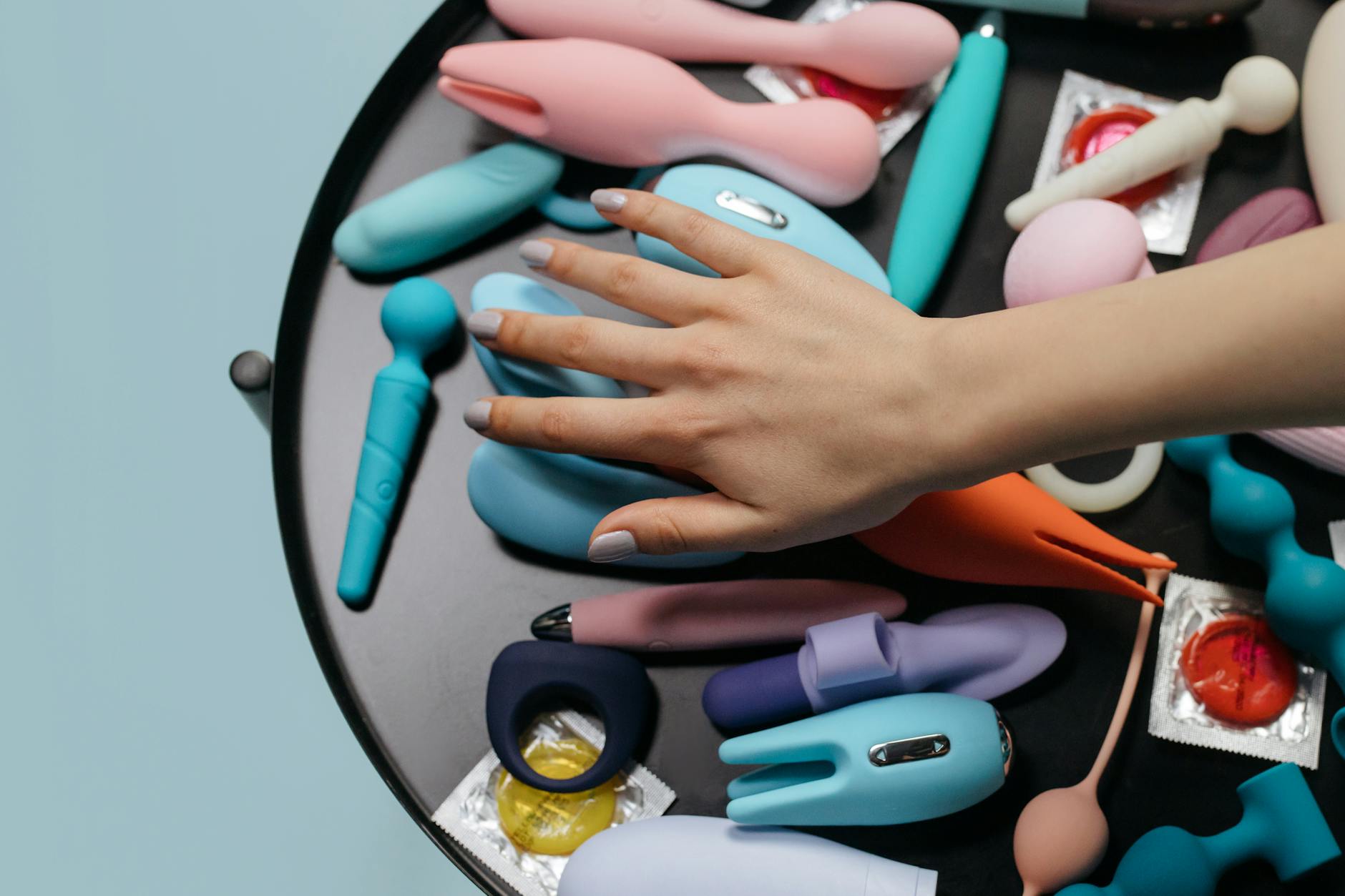
Here's what actually happens to your body's natural lubrication
Lubrication isn't a fixed thing. It changes. Birth control shifts it, hormonal cycles shift it, stress shifts it, pregnancy and postpartum shift it, and menopause absolutely shifts it. Most people are not told this happens, which means when it does, they assume something is wrong with them. It's not.
Lubrication is partly neurological (arousal signals to your body to produce it) and partly hormonal (estrogen and testosterone influence the tissue's capacity to create it). When either of those systems changes, your body's baseline lubrication changes too. That's information, not a problem.
Why this matters for a lemon vibrator specifically
Air-suction clitoral vibrators like Hello Nancy's Lems work differently than traditional vibrators. They create gentle suction rather than friction. That design choice means they're less dependent on lubrication than other toys. But it also means the way you use them might need to shift slightly when your body's lubrication changes.
If you've been using a lemon vibrator with your body's natural lubrication as backup, and that lubrication decreases, the toy still works. But the sensation changes. You might need a different approach to get the same result. That's the distinction between "the toy doesn't work anymore" and "I need to use it differently now."
The role of estrogen and how it affects tissue
Estrogen supports the thickness and elasticity of the vaginal tissue and the tissue around the clitoris. When estrogen drops (hormonal birth control, perimenopause, menopause, postpartum, breastfeeding, certain medications), that tissue becomes thinner and more delicate. It's also less able to produce and retain lubrication naturally.
That doesn't mean you can't feel pleasure. It means the tissue's response has changed. A lemon clitoral vibrator still activates the nerve endings. The clitoris doesn't lose sensitivity just because lubrication decreased. But the way the toy interacts with the tissue does shift.
When tissue is thicker, suction feels like a gentle pull. When tissue is thinner, that same suction can feel sharper or more localized. Some people prefer this. Some find it uncomfortable. The fix is usually small adjustments to intensity, position, or external lubrication. Not a new toy.
When to use external lubrication with your lemon vibrator
Lubrication isn't cheating. It's information about your body. Here's how to think about it.
If your natural lubrication is reduced and you're finding the sensation uncomfortable, or if the toy feels like it's pulling rather than massaging, add external lubrication. Water-based lubricant is safest for silicone toys (silicone lube can degrade silicone over time). A small amount at the top of the toy where it contacts your clitoris usually does the job.
Water-based lubes absorb into your skin faster than you'd expect. You might need to reapply halfway through. That's normal. It's not a sign the product is bad. It's just how the chemistry works.
Some people find that warming the lube slightly before application helps it feel more like their own body's response. You can do this by rubbing a small amount between your fingers first, or warming a bottle under warm water. Not hot. Warm.
Adjusting intensity when lubrication changes
Here's a practical adjustment that helps most people: lower your starting intensity. If you normally begin at pattern 2 or 3 on a lemon vibrator, drop to pattern 1 when external lubrication is new or when your natural lubrication is significantly reduced.
Pattern 1 gives the toy more time to find the right rhythm with your body's current response. It feels different when the tissue responds more slowly or less dramatically. You're not losing sensation. You're calibrating to how your body is actually responding today.
Many people move back up to their preferred intensity after 5-10 minutes, once arousal has built and your body has signaled it's ready. Some people stay at lower intensities because they find the sensation more precise that way. Neither choice is wrong.
You can also shift the angle of the toy slightly. The lemon's suction-based design means small position changes create noticeably different sensations. If straight-on suction feels too intense with reduced lubrication, try angling the toy slightly to the side. This distributes the sensation across a larger area and often feels gentler.
The psychological layer (which matters as much as the physical one)
When lubrication changes, especially if it's hormone-driven, the emotional layer gets tangled up with the physical one. Your brain knows something feels different. Your brain is right. But "different" is not the same as "broken" or "less."
The temptation is to assume reduced lubrication means reduced desire or reduced capacity for pleasure. This is almost never true. What's usually true is that your body needs slightly different input to reach the same arousal level. That's a logistics problem, not a pleasure problem.
If you have a partner, this is also a conversation to separate from other relationship stuff. "My body's lubrication has shifted because of hormones" is different from "I want us to reconnect" or "I'm stressed." Bundling them together turns both conversations into a dead end.
Timing and patience with arousal
When lubrication decreases, arousal often takes slightly longer to build. This is physiological, not psychological. Your brain's response time doesn't change. Your body's ability to signal "I'm ready" sometimes does.
Budget more time for foreplay or solo warm-up. Fifteen minutes of touch, thought, or anticipation before using your lemon vibrator makes a measurable difference. This isn't extra. It's the amount of time your body actually needs right now. Rushing it is like trying to start a car before the engine's warmed up. It works, but inefficiently.
Photo by Vanessa Loring on Pexels
What to watch for: when to see a provider
If lubrication changes are accompanied by pain, itching, or burning, that's a sign to check in with a gynecologist or primary care doctor. These symptoms sometimes indicate infection or genitourinary syndrome of menopause (GSM), both of which are treatable. Don't assume it's just "how things are now."
If lubrication changes significantly over a short period and you haven't had any obvious hormonal shifts (new birth control, entering perimenopause, major stress), that's also worth mentioning to a healthcare provider. Most of the time it's nothing. Sometimes it's a sign something else is happening hormonally.
A lemon clitoral vibrator works beautifully with adjusted lubrication, but your health provider is the person to rule out other causes first.
The bigger picture: your body adapts, and so do you
Hormonal shifts that affect lubrication are temporary or cyclical. Perimenopause shifts again into menopause, then stabilizes. Birth control can be changed. Postpartum shifts back as your hormones rebalance. Stress-related changes reverse when stress eases.
Your lemon vibrator isn't going anywhere. Your pleasure response isn't going anywhere. What's changing is the specific pathway your body takes to get there. That's information worth paying attention to. It's not a red light. It's an instruction manual for how to work with your body as it actually is.
If you're unsure whether the way you're using your toy when lubrication is low is right for you, check in with yourself. Pleasure should feel like something you want to do again. If it doesn't, adjust something. The variable might be lubrication. It might be timing. It might be intensity. Most of the time, a small change fixes it.
FAQ: Lubrication changes and lemon vibrators
Does reduced lubrication mean I can't orgasm anymore?
No. Orgasm is a neurological response, not a lubrication response. Lubrication supports comfort and sensation, but it's not the engine of pleasure. People orgasm with dry tissue all the time. Reduced natural lubrication sometimes means you need a different kind of input or external lubrication, but it doesn't mean orgasm stops. This is one of the most common misconceptions, and it's worth knowing it's not true.
Can I use a lemon vibrator without any lubrication at all?
Yes, you can. But it might not feel the way you prefer. If tissue is already thin or dry from hormonal changes, adding a small amount of water-based lubricant usually increases comfort and sensation. You don't need much. A pea-sized amount at the contact point often does the job. It's an option, not a requirement.
How often should I reapply lubricant while using my lemon vibrator?
This depends on the specific lube and your body's response. Water-based lubes absorb in 5-15 minutes on average. If you're using your toy for longer than that, check in midway through. You'll feel it when the glide changes. Some people keep a small container of lube nearby so they can reapply without interrupting the experience.
Will using external lubrication affect how my lemon vibrator feels long-term?
No. Lubrication is temporary. It washes away with water. It doesn't change the toy's material or function. You can use it or not use it depending on your preference that day. The toy adapts to whatever your body needs.
Is there a difference between water-based and silicone lube for clitoral vibrators?
Yes. Silicone lube feels silkier and lasts longer on the skin, but silicone lube can degrade silicone toys over time. Water-based lube is safer for silicone toys like Hello Nancy's Lems products. Water-based lube absorbs faster, so you might need to reapply more often. Both work. Water-based is the safer long-term choice for your toy.
Can hormonal birth control affect lubrication when I use a lemon vibrator?
Yes. Hormonal birth control can reduce natural lubrication for some people. If you switched birth control recently and noticed lubrication decreased, that's a common side effect. You can talk to your provider about adjusting your method, or you can use external lubrication with your toy. Both are valid options. Some people find certain birth control methods preserve lubrication better than others, but this varies person to person.
What if my lubrication changes suddenly without an obvious hormonal reason?
This sometimes happens with stress, dehydration, certain medications, or changes in overall health. If the change is significant or accompanied by other symptoms (itching, burning, pain), check in with your healthcare provider. Most sudden changes reverse once the underlying cause shifts. In the meantime, external lubrication helps you keep using your toy comfortably while you figure out what's going on.
Taking care of your body through transitions
Lubrication changes are one small part of how your body shifts over time. Using a lemon vibrator when those changes happen isn't about forcing your body to work like it used to. It's about understanding how your body works now and working with it, not against it. That's the difference between fighting your body and befriending it. Your pleasure is worth that conversation.
If you have questions about how to adapt your routine or if you're curious about whether a lemon clitoral vibrator is right for your specific situation, reach out to us. We're here to help.