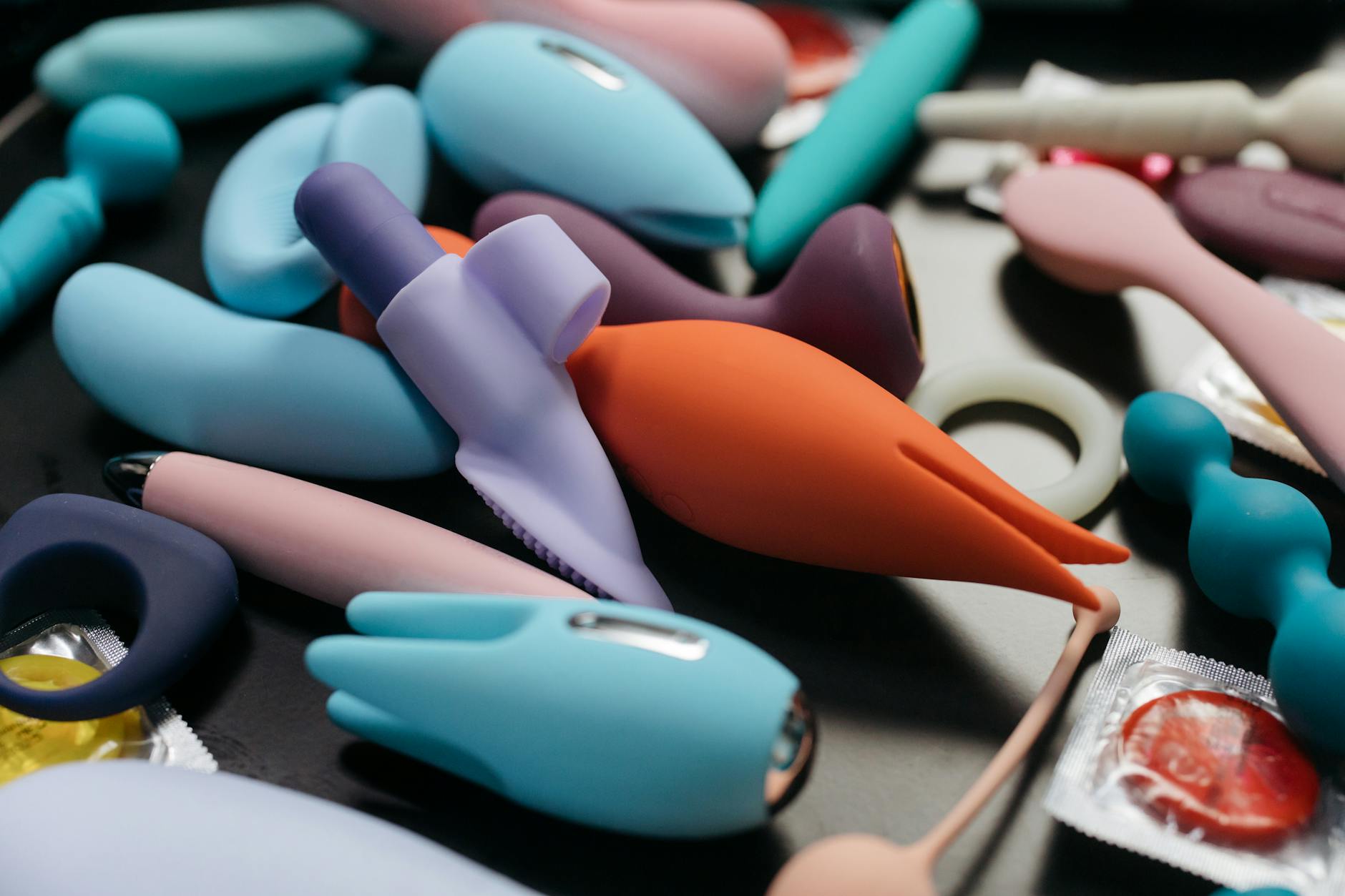
Here's the thing about sexual shame
It doesn't live in your body. It lives in a story you've been told about your body. That story might have come from religion, from your family, from a partner, from the culture you grew up in, or from something that happened to you. Wherever it came from, it sits between you and your pleasure like a third person in the room.
A lemon vibrator doesn't erase that story. But it can rewrite your relationship to your own arousal. And that's actually where healing starts.
Why vibrators are different when shame is involved
Let me separate two things that usually get tangled together. There's physiological pleasure, which is your body doing what bodies do. And there's permission, which is your mind deciding you're allowed to have it.
When you've internalized shame, your nervous system has learned to interrupt yourself. You might have a thought like "I don't deserve this" or "This is selfish" or "Something's wrong with me for wanting this." These thoughts aren't logic you can argue with. They're survival mechanisms your brain installed to keep you safe.
A clitoral vibrator works because it's direct, nonjudgmental, and entirely separate from other people. You're not performing. You're not waiting for permission. You're not managing someone else's reaction. You're alone with a sensation that either feels good or doesn't. There's no narrative attached. No voice in your head saying "good girls don't." Just physiology.
That's powerful. And it's why so many people using a lemon vibrator for the first time after a history of shame end up crying. It's not sadness. It's relief.
The first barrier you'll probably hit
You might feel guilty about feeling good.
This isn't weakness or prudishness. It's your nervous system doing exactly what it was trained to do. Your brain learned early that pleasure was risky. Maybe it meant being blamed. Maybe it meant vulnerability. Maybe it meant you were being a bad person. Now, even alone with a clitoral vibrator, your brain will try to sabotage the experience.
Here's what I tell my clients: the guilt isn't information. It's just noise. You don't have to act on it. You don't have to convince yourself you're not guilty. You just notice it, name it, and keep going.
Set a timer for 15 minutes. Tell yourself that's the only goal. Not orgasm. Not feeling good. Just 15 minutes of curiosity about what this feels like. The lemon vibrator is just sitting here. Your body is just sensing things. Guilt and all. That's it.
Building the actual practice
Four steps to make this less fraught:
Start fully clothed. Underwear on, pants on, vibrator over fabric. The goal isn't sex. It's sensory information with maximum distance from "this counts as sexual." When shame is involved, you need to prove to yourself that curiosity isn't sin.
Use the lowest pattern first. A lemon vibrator has multiple intensities. Start on the gentlest setting. Not because you're fragile, but because lower intensity means less activation, which means you can think more clearly. Shame wants you spiraling in sensation. Stay present instead.
Name what you notice, out loud if you can. "My thigh twitched." "That feels tingly." "I feel resistant." Shame thrives in silence and secrecy. The moment you narrate your own experience, you're taking power back. You're not a passive victim of guilt. You're an active observer of your own body.
Stop whenever you want. The biggest difference between shame-driven sexuality and permission-based sexuality is choice. You're not obligated to keep going. You're not letting yourself or a partner down. If you need to stop, you stop. Stopping is data, not failure.
When the shame is tied to trauma
If you have a history of sexual abuse or coercion, a lemon vibrator can be deeply healing. But it's not a substitute for therapy.
Trauma changes how you process physical sensation. Your body might go numb. Your nervous system might lock up. You might have a flashback. These are normal responses, not signs you're broken or that the vibrator "doesn't work" for you.
If you've survived sexual violence, working with a trauma-informed therapist or counselor before or alongside exploring pleasure tools is genuinely important. They can help you recognize what's shame (a story you internalized) and what's trauma response (your nervous system protecting itself). Those need different approaches.
A vibrator is a tool. Therapy is medicine. You deserve both.
The unexpected shift that happens next
After a few weeks of regular use, most people report something strange: the shame gets quieter.
Not gone. Not completely. But quieter. Because you've proven something to your brain. You've proven that pleasure doesn't hurt you. You've proven that you can choose what happens to your body. You've proven that good things can happen when you give yourself permission.
Your nervous system starts to update its threat assessment. Pleasure starts to feel less like danger.
That's when people usually want to explore more. How to use a lemon vibrator when anxiety makes you tense during sex addresses what happens when your nervous system is still relearning safety.
Shame in partnered sex
If you're in a relationship, shame can show up differently. You might feel shame about wanting a clitoral vibrator, or about needing one, or about using one during partnered sex.
Here's what actually matters: your pleasure is not a performance for your partner. It's not a gift you give them or owe them. It's yours. A lemon vibrator is equipment that helps you access something you're entitled to have. Your partner's job is to respect that, not to judge it or make it about themselves.
If a partner expresses shame or judgment about you using a vibrator, that's information too. That's about their discomfort, not about anything being wrong with you. How to use a lemon vibrator when your partner dismisses toys digs into that dynamic specifically.
The permission you actually need
I'm going to say this directly: you don't need permission from me, from your partner, from God, from anyone to explore your own pleasure. You need permission from yourself. And that's the permission you're actually rebuilding every time you pick up that lemon vibrator.
Your pleasure matters. Not because it's good for your relationship or your health (though it might be both). It matters because you exist. Because your body has sensations. Because you're allowed to feel good.
That's not selfish. That's not shameful. That's just being human.
FAQ
Can a lemon vibrator help me move past shame if I've never explored my body before?
Absolutely. A lot of people who grew up with messaging that their bodies were shameful have never actually spent time alone with sensation. A lemon vibrator gives you that space in a totally nonjudgmental way. It's just a tool. Your body isn't sinful for responding to it. You're not dirty. You're curious. And curiosity heals shame faster than judgment ever will.
What if I use a vibrator but still feel guilty afterward?
That's normal. Shame doesn't flip a switch. It's more like turning up the volume on a different channel. The guilt will probably still show up for a while. Keep going anyway. Each time you use the vibrator and nothing bad happens, your nervous system updates its model of reality. Eventually, the guilt becomes background noise instead of the main track.
Is it shameful to use a clitoral vibrator alone if I'm in a relationship?
Not at all. Solo pleasure and partnered pleasure are completely separate things. Your pleasure isn't currency in your relationship. It's your own. A lemon vibrator used alone is actually a radical act of self-preservation when you've been taught that your body belongs to other people. Use it.
Should I tell my partner I'm using a vibrator if shame was taught by my family or religion?
That's your choice, and it depends on your relationship's safety. Some couples are ready for that conversation. Some aren't. But notice the structure of that question: you're asking permission again. You don't need it. Your solo pleasure is yours to keep private. Your body is not a democracy.
What if I can't orgasm even with a vibrator, and I feel like I'm failing at healing?
Orgasm isn't the goal. Pleasure is. Sensation is. Permission is. Some people with deep shame find that orgasm takes longer to "unlock" because it feels scarier. That's okay. A lemon vibrator that you use for 10 minutes and feel nothing but curiosity is still doing its job. You're still retraining your nervous system. Keep going.
How do I know if I should see a therapist alongside using a vibrator?
If the shame is connected to trauma, definitely yes. If you find yourself crying, freezing, or having intrusive thoughts during or after vibrator use, reach out to a therapist. But also: a therapist is useful if you just want extra support while you're healing. Therapy and vibrators aren't either/or. They're better together.