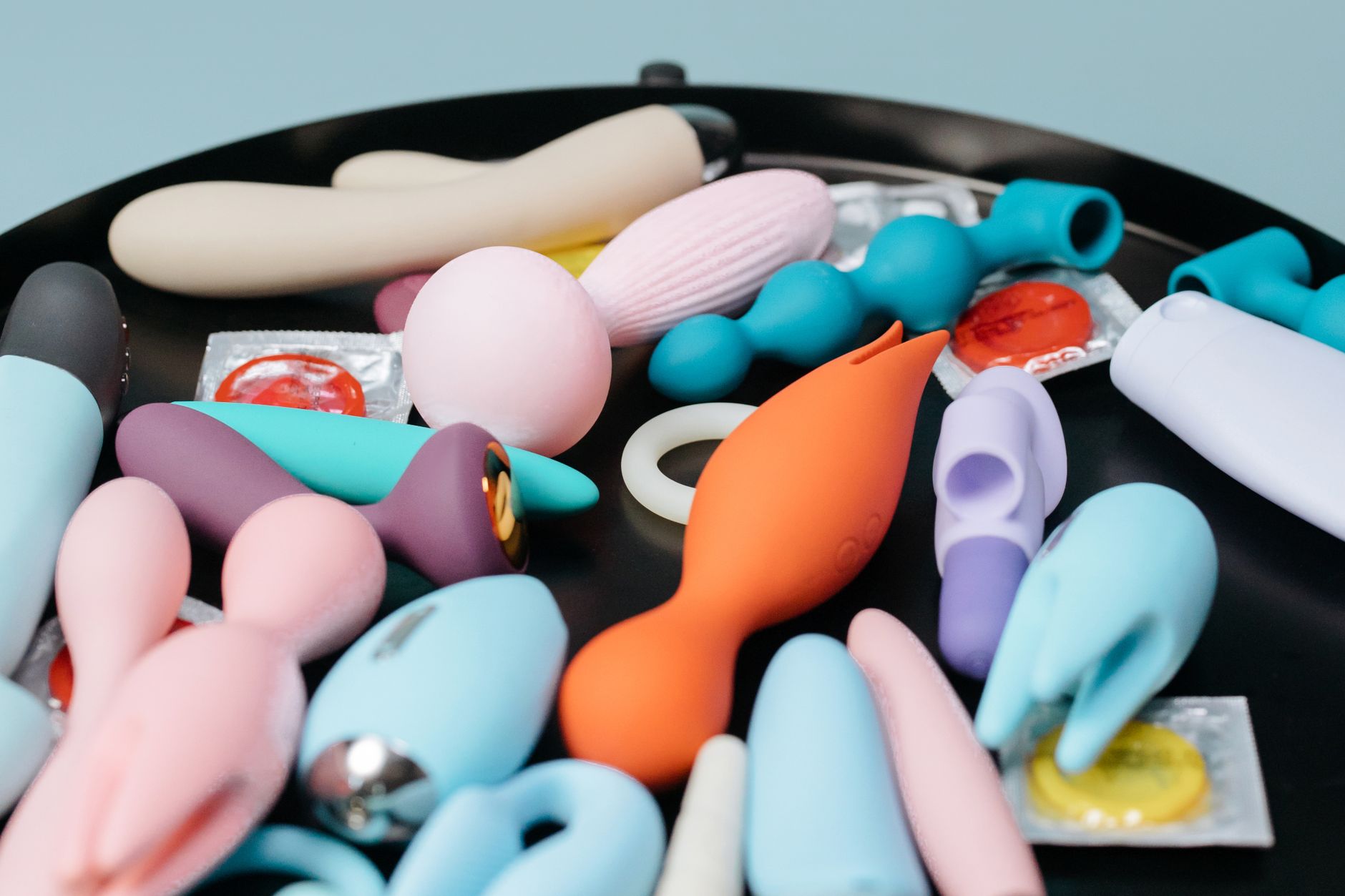
The strange relief when desire starts to wake up
Depression doesn't just steal your mood. It steals your body. For months or longer, sex might have felt like something other people did, something that required energy you didn't have, something you couldn't feel even if you tried. Then one day something shifts. A medication change. A therapy breakthrough. Time. And suddenly, there's a tiny spark. A flutter of actual desire.
Which sounds great, except now you're standing at the edge of something unfamiliar.
Your body doesn't feel like yours yet. You're not sure what sensation is normal anymore. Touching yourself feels awkward in a way it didn't before depression hit. A partner might be eager to reconnect, which adds pressure you definitely don't need. And if you've been depressed long enough, the wiring between arousal and pleasure might need rebuilding from scratch.
That's where a lemon clitoral vibrator changes things.
Why depression breaks the pleasure circuit (and how to repair it)
Depression is a full-body hijack. It doesn't just affect your brain chemistry; it blunts your nervous system's ability to register sensation. Touch feels muted. Orgasms feel distant or impossible. Desire shows up as an intellectual idea ("I should want this") rather than a physical feeling.
When antidepressants work, or when therapy shifts your brain chemistry, the reconnection doesn't happen all at once. Your body has been running on low sensory input for a long time. It takes time to rebuild the neural pathways that connect touch to pleasure.
This is where tools like lemon vibrators help. They do two things:
First, they provide stimulation that's strong enough to reliably reach your nervous system without requiring you to generate that energy yourself. Depression leaves you depleted. A vibrator handles the physical work; you just have to show up.
Second, they give you permission to explore slowly. A lemon clitoral vibrator lets you experiment with different intensities, patterns, and rhythms without judgment or pressure to perform.
Starting from zero: the first week back
Honestly though, the first time you reconnect with yourself after depression, don't expect much. Expect curiosity. Expect fumbling. Expect maybe nothing at all.
Here's what I recommend:
Week one is about re-familiarization, not orgasm. Use your lemon vibrator on the lowest setting for 5 to 10 minutes. You're not trying to finish. You're just reintroducing your clitoris to sensation. Some people feel pleasure immediately. Others feel a faint buzz and not much more. Both are fine.
Find a time with zero pressure. Not when a partner is waiting in the next room. Not when you have a to-do list spinning in your head. Early morning or late evening when you're alone and nobody needs anything from you.
Don't lie down at first. Sit propped up against pillows or in a comfortable chair. This small position change makes a psychological difference. You're not performing; you're experimenting.
Use a water-based lubricant even if you don't think you need it. Depression often reduces natural lubrication. A little lube makes the sensation feel better and removes friction that can make touch feel uncomfortable rather than good.
The second and third weeks: building the map
Once you've had a few solo sessions with your lemon vibrator, you're ready to learn what actually feels good to you right now. This is different from what felt good before depression. Your body has changed. Your sensitivity might be different. Your favorite patterns might have shifted.
Experiment with intensities. The Lem and similar lemon clitoral vibrators usually have 3 to 5 intensity settings. Most people coming back from depression do best starting at 2 or 3, where the stimulation is clear but not overwhelming. Spend a few sessions at each level. Notice what feels different.
Try different patterns. Some lemon vibrators offer pulse options or rhythms in addition to steady vibration. Your brain might wake up to one pattern but not another. This is detective work, and it's genuinely interesting once you stop expecting an orgasm and start paying attention to sensation instead.
Track what lands. I tell my clients to keep a two-sentence journal. Not a diary, just: "Used the Lem on setting 3 for 8 minutes, steady pulse. Felt good on the side of my clitoris, less on direct pressure." This sounds clinical, but after depression your brain needs data, not feelings. Data helps you rebuild trust in your body.
When to bring a partner into it
This is where I often see people rush, and it's a mistake.
If you're partnered, your partner might be thrilled that your desire is returning. They might want to jump right back into sex. Don't. Not yet. You need at least two to three weeks solo with your lemon vibrator before a partner joins in.
Why? Because partnered sex adds a layer of pressure (even unspoken pressure) that will hijack the exploration you're doing. You'll start performing again instead of noticing what actually feels good.
When you do bring a partner in, start with them just present, not touching. You use your lemon clitoral vibrator while they're in the room, maybe reading or just sitting quietly. This sounds weird, but it's not. It's a middle step. They get to see that desire is returning; you get to feel pleasure without the weight of their attention or their expectations.
Only after a few sessions of that should you move to partnered touch. And even then, let the lemon vibrator be the star. Your partner's role is to hold space and maybe kiss your neck, not to take over.
The month-two shift: when pleasure actually starts to land
Around week four or five, something changes. Your nervous system starts to remember what pleasure is. Orgasms might become possible again. Or maybe they don't; some people take longer. Either way, the fog lifts a little.
At this point, you can start thinking about what you actually want. Do you want partnered sex? Solo exploration? A mix? Are there specific textures, pressures, or rhythms your body is asking for? Can you ask for them without shame?
Depression often tangled up your sense of deserving pleasure. Rebuilding that deserving is part of reconnection too. Using a tool like a lemon vibrator is actually a way of saying to yourself: "I am worth the time to feel good. My pleasure matters. I get to explore this without rushing."
That's not small.
Common setbacks and what they actually mean
Some days the lemon vibrator will feel amazing. Other days it'll feel like absolutely nothing. This is normal. Your nervous system is still settling. Stress, sleep, hydration, and your menstrual cycle (if you have one) all affect sensation.
If you go two weeks with zero sensation and it's demoralizing, that's worth flagging with your therapist or doctor. Sometimes it means you need a medication tweak. Sometimes it means depression is still wrestling for control and you need more support.
But most of the time, a plateau just means your system is integrating. Keep going. Your body will surprise you.
One thing that often catches people off guard: shame can bubble up mid-exploration. Particularly if depression was tied to trauma or if you've internalized messages that pleasure is wrong or greedy. That's real, and it deserves attention. If shame keeps interrupting, it might be worth talking through with a therapist before you keep pushing.
Making space for partners without losing yourself
If you're rebuilding intimacy with someone, this is delicate. Their excitement about your returning desire is real and valid. And so is your need to move slowly.
A helpful boundary: "I'm rebuilding my relationship with my own body. That means I'm going to be using my lemon vibrator solo for the next few weeks. When I'm ready for partnered sex, I'll let you know. In the meantime, I love you, and this is about healing, not about you."
Most partners understand that. Some don't. If someone is impatient or resentful about your need to go slowly after depression, that's information about the relationship that's worth paying attention to.
When depression tries to creep back in
Here's the honest truth: sometimes desire disappears again. Depression is cyclical, and so is libido. If that happens, don't interpret it as failure. Your lemon vibrator will still be there. Your body will still know how to reconnect.
The work you've done in these first weeks isn't wasted. You've learned that pleasure is possible for you. You've rebuilt some of the neural pathways. If depression lifts again, reconnection the second time is usually faster.
FAQ: Returning to pleasure after depression
Why does my clitoris feel numb even though I'm off antidepressants?
Antidepressants aren't always the culprit. Depression itself flattens sensation. Even after medication is lowered or stopped, your nervous system needs time to recalibrate. Think of it like muscle atrophy. You can't bench press your old weight the first day you're back at the gym. Your clitoris needs the same gentle reintroduction. A lemon clitoral vibrator provides consistent, reliable stimulation that helps wake up those nerve endings without pressure.
Is it normal to have no orgasm for the first month?
Completely normal. Orgasm is the last thing to return after depression because it requires the full chain: arousal, sensation, muscle engagement, and mental presence all clicking at once. Some people get arousal back in a week and orgasms in a month. Others take three months or longer. There's no timeline. The lemon vibrator is useful because it removes the pressure to orgasm and just focuses on sensation, which is what your body actually needs right now.
Can I use a lemon vibrator if I'm still on antidepressants?
Absolutely. Some people experience reduced sensation from SSRIs, which actually makes a lemon vibrator more helpful because it provides stronger stimulation than fingers alone. If your antidepressant is truly flattening sensation to the point that even strong vibration doesn't register, that's something to discuss with your prescriber. Sometimes a medication tweak helps.
What if my partner wants to use the lemon vibrator on me and I'm not ready?
That's a boundary conversation. You can say something like: "Right now I need to relearn my own body. Once I'm comfortable with how this feels on me, then I'd love your help." Most partners respect that. If they push back, that's a red flag worth exploring with a therapist.
Should I be using my lemon vibrator when my partner is home?
Yes, eventually. But not right away. Spend at least two weeks exploring alone. Then, as mentioned earlier, have a solo session while your partner is present in the room but not engaged. This is a middle step that helps you feel less alone without the pressure of partnered touch. After that, you can explore together.
Is it okay to take breaks from the lemon vibrator?
Yes. If you're building sensation back slowly, you might do five days on and two days off. Or you might do three weeks and then need a break. Your nervous system will tell you what it needs. Listen to it. This isn't a sprint.
Coming back from depression is weird. Your brain is chemical again. Your body is yours again. But they don't sync up immediately. A lemon vibrator is one tool for that reconnection. It removes pressure, provides reliable sensation, and gives you permission to explore at your own pace.
Your pleasure matters. The time it takes to rebuild is time worth taking. If you have questions about how to approach this with a partner or if you're struggling with shame around pleasure, reaching out to a therapist or contacting Hello Nancy's Lems for guidance is always an option. You don't have to figure this out alone.