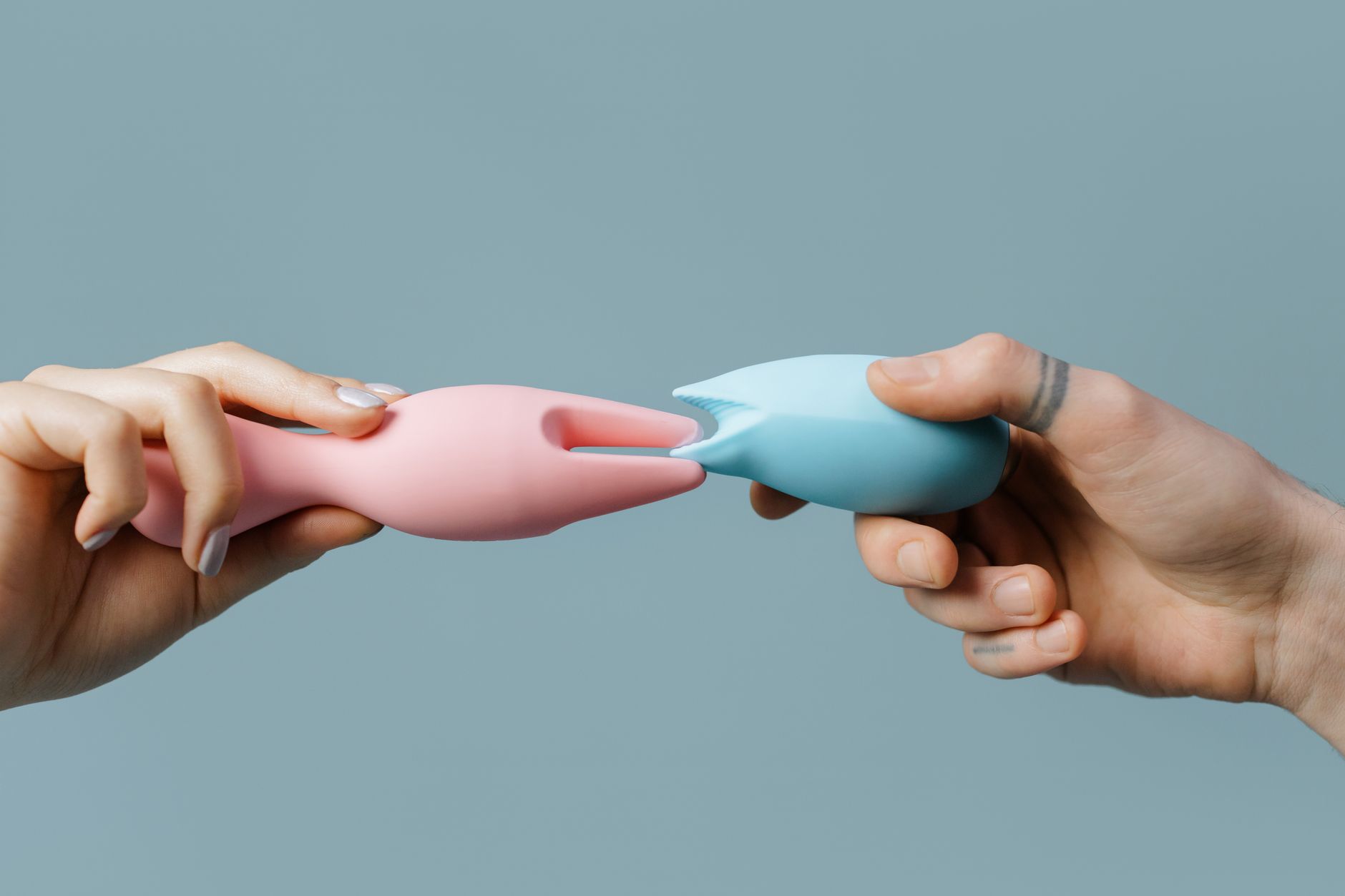
The thing nobody tells you about this conversation
You've been thinking about bringing up toys for weeks. Maybe longer. The anxiety is real: Will they feel insulted? Will they think you're not satisfied? Will it be awkward forever after? Here's what I've seen work across thousands of couples: the conversation is almost always smaller and less weird than you imagine it will be. Your partner probably isn't offended by the idea of more pleasure. They're just surprised they hadn't brought it up first.
This guide is for anyone who's held back because their partner seemed disinterested, untouched by toys, or maybe even dismissive. The goal isn't to convince them. It's to create enough safety and clarity that they can actually say yes or no without defending themselves.
Why a lemon vibrator is the easiest entry point
Let's talk specifics. If you're considering toys, a lemon clitoral vibrator is one of the smartest starting points for a partner who's never used anything before. Why. Air-suction toys like the Lem feel totally different from traditional vibrators. They're not aggressive. They don't require a partner to feel like they're being replaced. Instead, they focus on suction rather than buzzing, which means the sensation is gentler and more intuitive for someone's first experience.
A lemon vibrator also signals something to your partner: you're thinking about shared pleasure, not solo performance. That signal matters.
Timing is everything when you bring this up
Don't have this conversation during sex. Don't have it when you're frustrated about your sex life. Don't lead with it during an argument about anything else. Those moments pile context on top of what should be a simple discussion.
The best time is calm, clothed, and low-stakes. Honestly. A Sunday morning walk. A quiet dinner at home. A drive to somewhere boring. Anywhere you're not about to have sex and nowhere you're likely to be interrupted. Your nervous system needs room to stay regulated, and so does theirs.
Frame it as a curiosity, not a complaint. "I've been thinking about trying something new together" lands differently than "Our sex life needs this."
What actually to say (and what not to)
Avoid these openings:
- "I want us to use toys." (Feels like a demand)
- "Don't you want to make me feel better?" (Implies they're failing)
- "Everyone's doing this now." (Brings in social pressure instead of desire)
- "I read that couples who use toys have better sex." (Sounds like homework)
Try these instead:
- "I saw something I'm curious about. Want to explore it together?"
- "I've been thinking it might be fun to play around with something new."
- "There's this toy I'm interested in. I'd love to use it with you."
- "I want to experience something together that we haven't tried yet."
Notice the shift. You're inviting curiosity, not solving a problem. You're centering shared experience, not your individual need. The lemon vibrator becomes a tool for both of you, not a workaround for what your partner isn't providing.
What to do if they get defensive (spoiler: it's not about the toy)
Some partners react with concern, judgment, or withdrawal. This usually isn't about vibrators at all. It's about deeper fears: Am I enough. Will this change how we connect. Is something wrong with what we have.
If defensiveness appears, slow down. You don't need to convince them right now.
Stay curious instead of defensive yourself. "I hear you. What's coming up for you?" opens space. "You're being weird" or "It's not a big deal" closes it.
Separate the toy from the relationship. "This isn't about you not being enough. I just want to try something new. We can do it together or not, totally up to you."
Give them time. Not everyone needs to decide instantly. Some people need a few days to sit with the idea. That's okay.
Offer different angles if one doesn't land. Some partners respond better to "I want to feel good" than "Let's experiment." Others need "This is for both of us" more than "This is for you to give me."
How to make the first experience easy
Once you've talked and they've agreed (or at least agreed to think about it), strip away barriers to saying yes later.
Don't build it into a Big Sexual Experience. The first time you introduce a lemon vibrator shouldn't be the night you're both anxious and trying to make it special. Use it during regular sex, when you're already in the rhythm. Introduce it casually. "Want to try it tonight?" Low ceremony works best.
Show them it's small and not intimidating. A lot of first-time anxiety comes from imagining something industrial or huge. Lemon vibrators are genuinely small and approachable. Let them hold it. See it's not scary. That alone shifts perspective.
Explain what they'll experience. "This uses suction instead of buzzing. It's gentle at first and you can turn it up. You can control the patterns." Knowledge kills mystery-based anxiety.
Give them an out anytime. "If you want to stop or pause, just say so." This isn't just kindness. It's permission. Knowing they have agency makes most people more willing to experiment.
Start with you. If your partner is still nervous, use it on yourself first while they watch. This shows it's pleasurable, not scary. It also removes performance pressure from them.
The conversation after (which matters more than you think)
After you've tried it, check in. Not immediately during sex. The next morning, or later that day. "How did that feel for you?" opens the door to actual feedback instead of assumptions.
Their answer might be: "I loved it." "It was weird." "I want to try it again but differently." "I'm not sure." "I felt awkward." All of these are data, not rejection. If it lands, that's wonderful. If it doesn't, you've still created a template for trying new things together.
The real win here isn't whether the lemon vibrator becomes a regular part of your routine. It's that you've shown your partner that pleasure conversations can be direct, shame-free, and collaborative. That's relationship infrastructure. That's what changes things long-term.
When nervousness is actually about something else
Sometimes the block isn't about toys at all. It's about control, body image, trust, or past experiences. If your partner says no and won't explain, or if the conversation reveals deeper friction, that's not a toy problem. That's a relationship signal. It might be worth talking to a therapist together, not to "fix" their reaction to vibrators, but to understand what's really driving it. A lemon vibrator isn't a solution to disconnection. It's a tool for two people who already feel reasonably connected.
FAQ: The questions couples actually ask
Will using a vibrator make my partner feel like they're not enough?
Only if you frame it that way. Vibrators aren't replacements. They're supplements. You can say that directly: "This isn't about what you can't do. It's about adding sensation we both enjoy." Most partners get this immediately once you say it out loud.
What if they agree but seem uncomfortable during it?
Stop. Seriously. Check in: "You seem nervous. Want to pause?" Pushing through discomfort teaches both of you the wrong thing. The goal is comfort and curiosity, not performance. Try again another time with a different approach.
Should I buy one before we talk, or talk first?
Talk first, absolutely. Showing up with a toy before discussing it feels like you've already decided and they're just supposed to go along. The conversation is the important part. The toy is just equipment.
What if they want to use it only on themselves and not with me?
That's their boundary, and it's worth respecting. Some people need solo practice before partnered exploration. Give them that space. It doesn't mean no forever. It means not yet.
Is a lemon clitoral vibrator really the best starting toy?
For a lot of couples, yes. Air-suction toys feel less intimidating and more intimate than traditional vibrators. They're quieter. They require less setup. They work well for different body types and sensitivities. How to Use a Lemon Vibrator With a Partner Who's Nervous About Toys goes deeper into technique if you want to know more.
What if they say yes to talking but no to actually trying it?
That's not failure. You've opened a door. They know you're interested. They know it's not off-limits. Sometimes people need time. Sometimes they're genuinely not interested, and that's their choice to make. Respect it and move forward. Forcing or resenting kills intimacy faster than anything else.
The long view
Introducing a lemon vibrator to a partner who's never used toys is really about introducing a new language to your intimacy. It's saying: we can talk about what we want, we can try new things, we can make decisions together, and we can do all of it without shame. That conversation matters more than any toy ever will. The Lem is just the medium. The real work is creating enough safety that your partner can say what they actually want without fear of being judged, replaced, or making you feel bad. Do that, and you've built something worth way more than better orgasms. You've built trust.